






What's Happening?
Pedro, a box turtle in Louisiana, lost both of his back legs after going missing for several months. Upon his return, veterinarians at the Veterinary Teaching Hospital at Louisiana State University devised an innovative solution to restore his mobility.
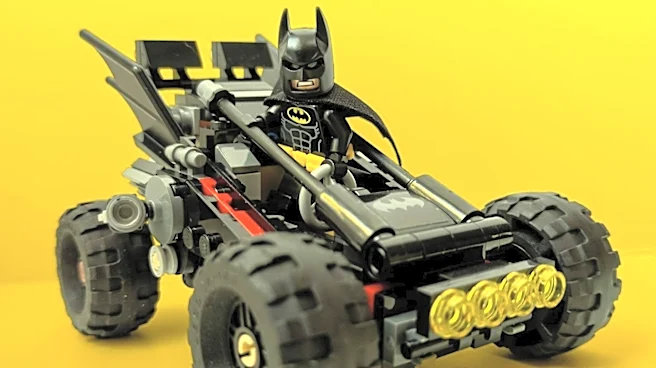
Instead of 3-D printing a prosthetic, which was considered, the team opted for a custom-built wheelchair made from readily available materials. The wheelchair utilizes LEGO car wheels, syringe cases cut down and glued to extend the axles, and a flat LEGO plate attached to the underside of Pedro's shell with animal-safe epoxy. This lightweight and detachable design allowed Pedro to regain his ability to move, reverse, and turn independently within minutes of being fitted.
Why It's Important?
This story highlights the ingenuity and resourcefulness often required in veterinary medicine, especially when dealing with unique cases and non-traditional patients. The decision to use common, inexpensive materials like LEGOs and syringe cases demonstrates that effective solutions don't always require cutting-edge technology. This approach can inspire other veterinary professionals to think creatively when faced with similar challenges, particularly in situations where specialized equipment is unavailable or cost-prohibitive. Furthermore, it underscores the commitment to animal welfare, ensuring that even small creatures like turtles can maintain a good quality of life despite significant physical disabilities. The success of Pedro's wheelchair also serves as a heartwarming example of how simple innovations can make a profound difference in an animal's life.
What's Next?
The success of Pedro's wheelchair may encourage more widespread adoption of similar improvised solutions for animals with mobility issues, particularly reptiles and other small creatures for whom commercial prosthetics are not readily available. The veterinary team at LSU plans to document the design, providing a blueprint for other clinicians facing similar problems. This could lead to the development of standardized, low-cost, and easily replicable mobility aids for various animals. Future efforts might involve refining the design for durability, comfort, and adaptability to different species and sizes. The case also opens avenues for further research into animal prosthetics and rehabilitation, emphasizing practical, accessible solutions over complex, expensive ones.
Beyond the Headlines
Pedro's story transcends a simple veterinary case, touching upon broader themes of adaptability, innovation, and empathy. It challenges the notion that advanced technology is always the best or only solution, demonstrating the power of creative problem-solving with limited resources. Ethically, it reinforces the value placed on individual animal lives, regardless of their size or species, and the dedication of professionals to ensure their well-being. Culturally, such stories resonate widely, fostering a greater appreciation for animal welfare and inspiring public interest in science and engineering. In the long term, this approach could democratize access to assistive devices for animals, making rehabilitation more accessible and affordable, and ultimately improving the lives of countless disabled pets and wildlife.