







What's Happening?
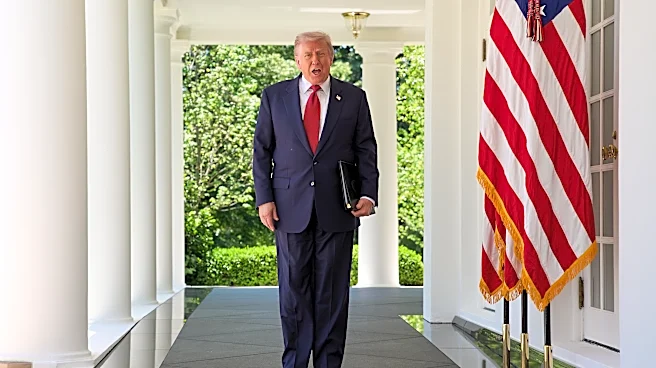
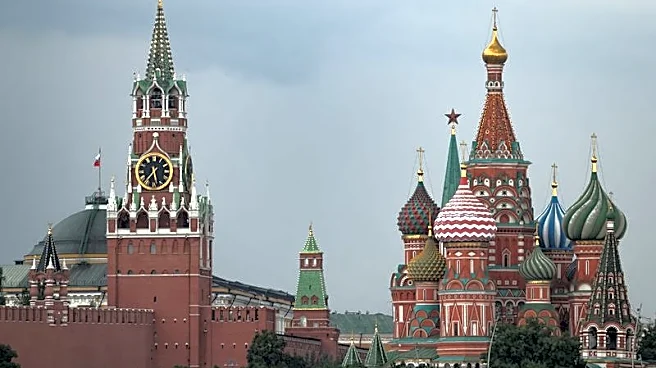
President Trump has expressed his willingness to send a US delegation to Moscow to facilitate negotiations aimed at ending the ongoing conflict between Russia and Ukraine. This announcement comes amid a fragile three-day ceasefire brokered by the United
States, which has temporarily halted hostilities between the two nations. The ceasefire, which coincides with Russia's Victory Day parade, has allowed for the exchange of 1,000 prisoners of war from each side. Despite the temporary truce, the conflict remains unresolved, with significant differences over the control of the Donbas region. Russian President Vladimir Putin has indicated a willingness to meet Ukrainian President Volodymyr Zelensky in a neutral country to finalize agreements, but not for further negotiations.
Why It's Important?
The potential involvement of a US delegation in Moscow signifies a critical diplomatic effort to resolve one of Europe's deadliest conflicts since World War II. The war has resulted in significant casualties and geopolitical tensions, impacting global security and economic stability. A successful negotiation could lead to a reduction in hostilities and a shift in international relations, particularly between the US, Russia, and Ukraine. The control of the Donbas region remains a contentious issue, with implications for regional power dynamics and the future of Ukraine's territorial integrity. The outcome of these negotiations could influence US foreign policy and its role in international conflict resolution.
What's Next?
If President Trump proceeds with sending a delegation, it could lead to direct talks between US and Russian officials, potentially expediting a resolution to the conflict. The success of these efforts will depend on the willingness of both Russia and Ukraine to compromise on key issues, particularly the status of the Donbas region. The international community, including European allies, will likely monitor these developments closely, as any agreement could set a precedent for future diplomatic interventions in similar conflicts. The continuation of the ceasefire and any subsequent agreements will be critical in determining the next steps in the peace process.