


What's Happening?
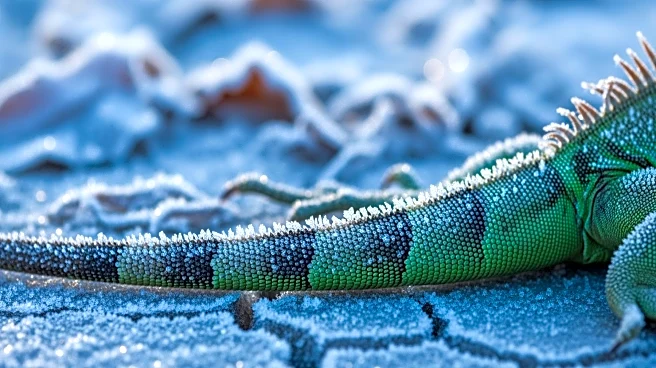
The Florida Fish and Wildlife Conservation Commission (FWC) has ceased the collection of 'frozen' iguanas following a recent cold front in South Florida. The cold weather caused iguanas, which are cold-blooded reptiles, to become immobile and fall from
trees. This phenomenon is not uncommon during cold spells in the region, as iguanas become temporarily paralyzed when temperatures drop below a certain threshold. The FWC's decision to stop collecting these iguanas comes as the cold front subsides, allowing the reptiles to recover as temperatures rise. The collection of iguanas during such weather events is typically aimed at managing the population of this invasive species, which can cause damage to local ecosystems and infrastructure.
Why It's Important?
The decision to halt the collection of frozen iguanas highlights the challenges of managing invasive species in Florida's unique climate. Iguanas, which are not native to Florida, have become a significant concern due to their impact on native wildlife and habitats. They can cause damage to infrastructure, such as sidewalks and seawalls, and compete with native species for resources. The FWC's actions reflect a balance between controlling the iguana population and responding to natural weather events that temporarily affect these animals. This situation underscores the broader issue of invasive species management in the U.S., where climate and environmental factors can complicate control efforts.