







What's Happening?
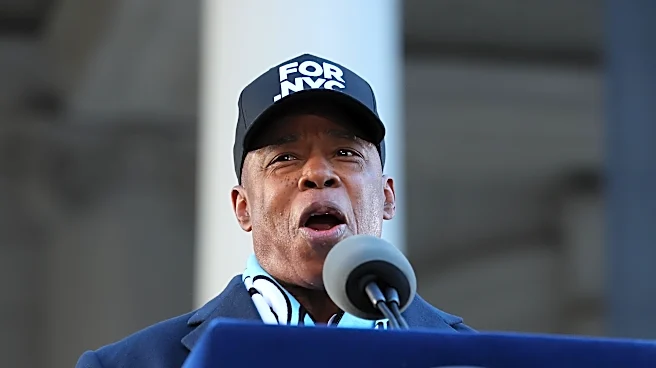
New York City Mayor Zohran Mamdani has announced the formation of a Civil Service Modernization Advisory Committee. This committee is tasked with studying the city's outdated civil service system, which is identified as a hindrance to both city workers
and residents. The initiative aims to bridge the gap between the Mayor's ambitious policy goals and the city's budget realities. New York City faces significant financial challenges, with the Mayor’s Office of Management and Budget projecting budget gaps exceeding $23 billion from fiscal year 2028 to 2030. These projections do not even account for funding key Mamdani priorities such as universal childcare and free buses. The committee's work is expected to explore how to transform government operations and deliver more efficient services at a lower cost, potentially leveraging advanced technologies like Artificial Intelligence and data insights.
Why It's Important?
The establishment of the Civil Service Modernization Advisory Committee is a critical step towards addressing systemic inefficiencies within New York City's government operations. An outdated civil service system can impede the delivery of essential public services, frustrate residents, and hinder the city's ability to attract and retain talent. By modernizing this system, the city aims to improve operational efficiency, reduce costs, and better align its workforce with contemporary needs. This initiative is particularly important given the projected multi-billion dollar budget deficits, as it seeks to find solutions beyond traditional tax increases or service cuts. A more efficient civil service could lead to better public services, more effective implementation of mayoral priorities, and a more sustainable financial future for the city.
What's Next?
The Civil Service Modernization Advisory Committee will commence its study of the existing civil service system, identifying areas for improvement and potential reforms. This will likely involve a comprehensive review of hiring practices, training programs, performance management, and technological integration. The committee is expected to propose recommendations that could include leveraging AI and data insights to streamline processes and enhance service delivery. These recommendations will then need to be evaluated by the Mayor's office and potentially implemented through legislative or administrative actions. The success of these reforms will be crucial in helping the city manage its rising expenses and achieve its ambitious policy goals within budget constraints.
Beyond the Headlines
The effort to modernize New York City's civil service system reflects a broader national challenge faced by many large municipalities: how to adapt legacy government structures to the demands of the 21st century. This initiative touches upon fundamental questions of public sector innovation, the role of technology in governance, and the future of work for government employees. The integration of AI and data insights, if implemented effectively, could revolutionize how city services are delivered, making them more responsive and cost-efficient. However, it also raises important considerations regarding job displacement, the need for workforce retraining, and ethical implications of AI in public administration. The outcome of this modernization effort in New York City could provide valuable lessons for other cities grappling with similar issues of bureaucratic inertia and fiscal pressure.