



What's Happening?
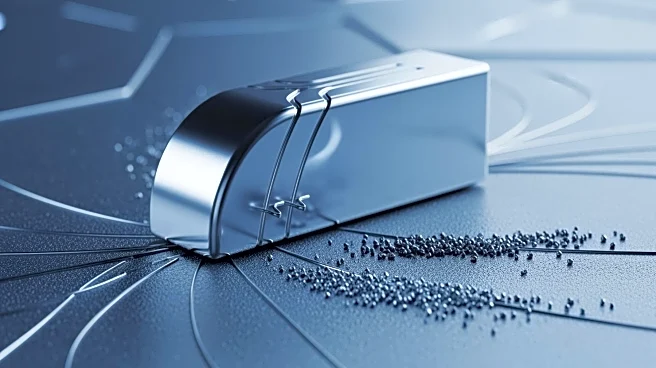
The Ministry of Heavy Industries in India has issued a global call for bids to establish integrated manufacturing facilities for sintered rare earth permanent magnets (REPM). This initiative is part of a government scheme aimed at enhancing domestic production
capabilities. The Request for Proposal (RFP) seeks to select beneficiaries to set up NdFeB-based REPM manufacturing units with a total capacity of 6,000 metric tonnes per annum. The scheme offers financial incentives, including a capital subsidy of Rs 750 crore and sales-linked incentives worth Rs 6,450 crore. The initiative is designed to create a complete domestic value chain from raw materials to finished magnets, reducing India's reliance on imports, particularly from China. The bidding process will be conducted online through a transparent Least Cost System (LCS), with the deadline for bid submissions set for May 28, 2026.
Why It's Important?
This development is significant as it addresses India's strategic need to reduce dependency on imports for critical components used in sectors such as electric vehicles, wind energy, electronics, aerospace, and defense. The move comes in response to China's recent export restrictions on rare earth elements, which have disrupted global supply chains. By establishing a domestic production capability, India aims to secure its supply chain and enhance its industrial competitiveness. The initiative also aligns with India's broader strategy to diversify its sources of critical minerals and reduce vulnerability to geopolitical tensions affecting global trade.
What's Next?
The next steps involve the submission and evaluation of bids, with technical bids scheduled to be opened on May 29, 2026. Successful bidders will receive support in the form of assured raw material supply through IREL (India) Ltd. This initiative is expected to attract significant interest from global manufacturers, given the financial incentives and the strategic importance of rare earth magnets. The outcome of this bidding process will likely influence India's industrial policy and its position in the global rare earth market.