










What's Happening?
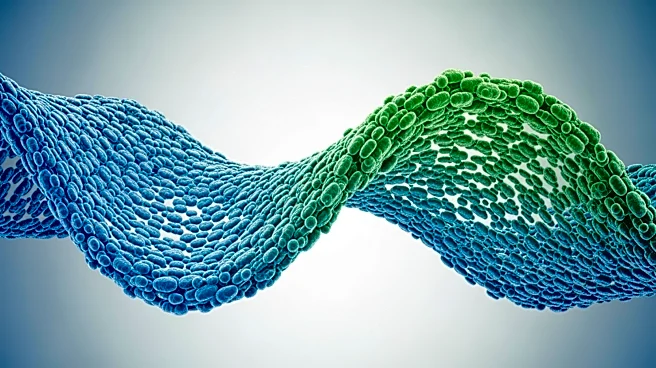
Researchers from Flinders University have discovered that bacteria can self-organize into migrating communities over long distances. The study, published in Nature Communications, used a tube system to track the movement of sewage-derived microbial communities.
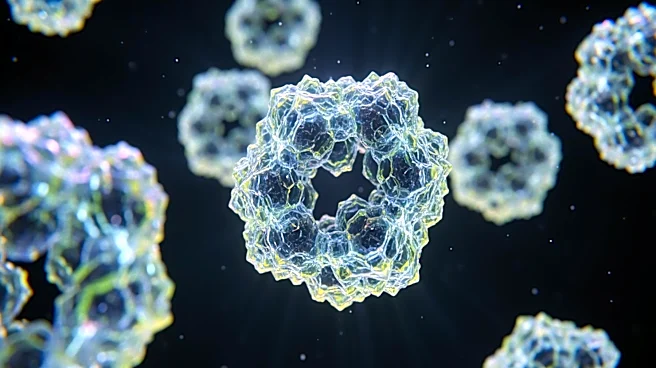
The findings reveal that bacteria do not migrate as solitary entities but as coordinated groups, bringing along viruses and non-swimming microbes. This migration is driven by the need to access nutrients and is characterized by the formation of visible bands that increase in speed over time.
Why It's Important?
The study provides new insights into microbial behavior and migration, which have significant implications for both medical and environmental contexts. Understanding how bacteria migrate can inform strategies to control the spread of pathogens in healthcare settings and improve wastewater treatment processes. The research also highlights the importance of microbial diversity in maintaining ecosystem resilience and supporting agricultural soil health. By revealing the complex interactions within microbial communities, the study contributes to the broader understanding of microbial ecology and its applications.