





What's Happening?
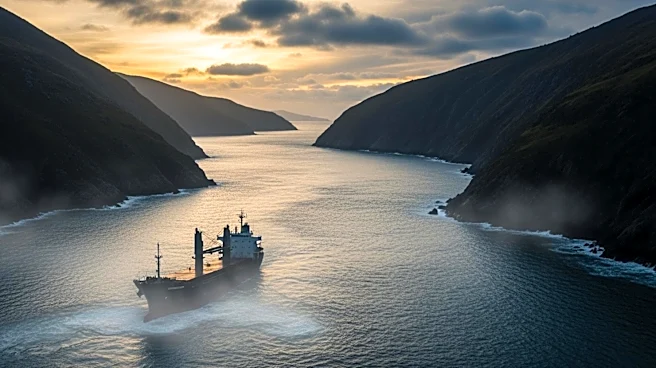
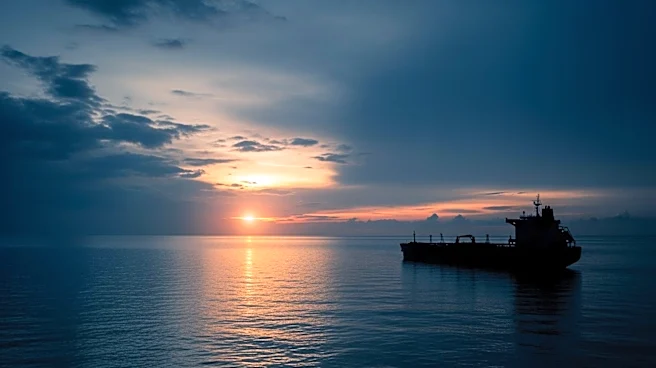
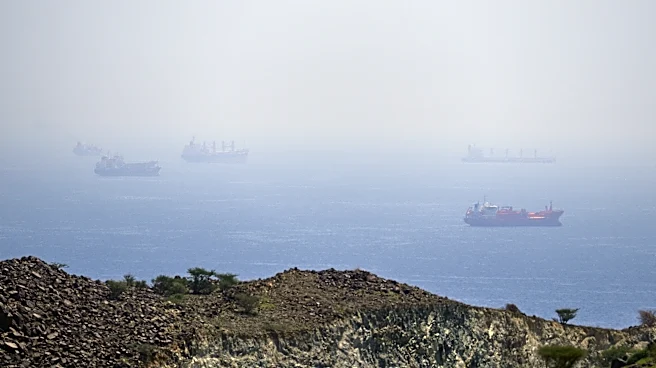
Defense Secretary Pete Hegseth has criticized U.S. allies for not taking a more active role in addressing the disruption in the Strait of Hormuz, a critical waterway for global oil transport. Amid ongoing tensions with Iran, Hegseth emphasized that the responsibility
to secure the strait should not fall solely on the United States. He called for European and Asian allies to contribute more significantly to the effort, highlighting the strategic importance of the strait for their energy needs. Hegseth's comments reflect broader frustrations within the Trump administration regarding perceived imbalances in international defense commitments.
Why It's Important?
The Strait of Hormuz is a vital chokepoint for global energy supplies, and its security is crucial for maintaining stable oil prices. Hegseth's remarks underscore the geopolitical stakes involved and the potential economic impact of prolonged disruptions. The call for greater ally involvement reflects ongoing debates about burden-sharing within international alliances like NATO. The situation also highlights the complexities of U.S. foreign policy under President Trump, who has frequently criticized allies for not contributing enough to collective security efforts. The outcome of this diplomatic tension could influence future U.S. military and economic strategies.
What's Next?
The U.S. may continue to pressure allies to increase their military presence in the region, potentially leading to new diplomatic negotiations or agreements. The situation could also prompt discussions within NATO and other international forums about the distribution of defense responsibilities. If allies respond positively, it could strengthen international cooperation in securing the Strait of Hormuz. However, failure to reach a consensus may lead to unilateral actions by the U.S., affecting global energy markets and international relations.