
What's Happening?
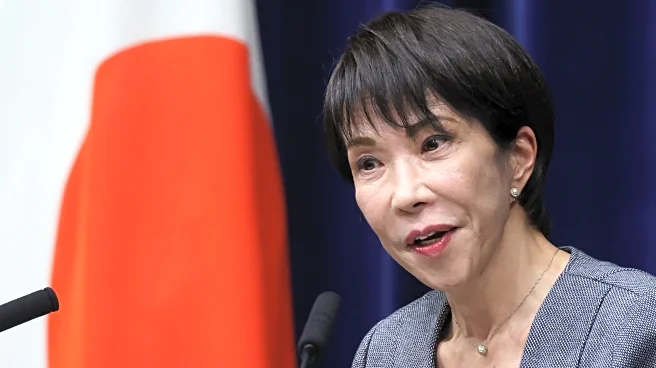
Japanese Prime Minister Sanae Takaichi is set to host South Korean President Lee Jae Myung in Nara, Japan, for a summit aimed at strengthening bilateral ties. This meeting comes as Japan's relations with
China become increasingly strained, particularly following Takaichi's comments on potential military action regarding Taiwan. The summit will focus on trade, security, and the challenges posed by China and North Korea. Both leaders are under pressure from the United States to increase defense spending and maintain a strong trilateral relationship with the U.S. The meeting is part of a broader diplomatic effort in the region, with Lee having recently visited China to discuss similar issues.
Why It's Important?
The summit between Japan and South Korea is significant as it represents a strategic effort to stabilize relations in a region marked by historical tensions and current geopolitical challenges. Strengthening ties between these two nations is crucial for maintaining a balance of power in Asia, especially in light of China's growing influence. The U.S. plays a pivotal role in this dynamic, as it seeks to ensure that its allies in the region are aligned in their defense and economic strategies. The outcome of this summit could impact regional security, trade agreements, and diplomatic relations, potentially influencing the broader geopolitical landscape in Asia.
What's Next?
Following the summit, both leaders are expected to continue discussions on enhancing cooperation in areas such as trade and security. There may be further diplomatic engagements to address unresolved historical issues and to explore new avenues for collaboration. The international community will be watching closely to see how these talks influence Japan and South Korea's relations with China and the U.S. Additionally, any agreements or statements made during the summit could set the tone for future diplomatic interactions in the region.