



What's Happening?
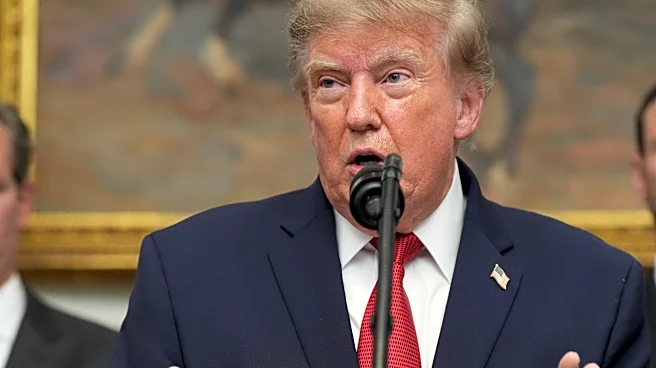
President Trump has reportedly threatened to bomb Oman if the Gulf state interferes with U.S. efforts to control shipping traffic through the Strait of Hormuz. This marks the second such threat in three months. Oman, a long-standing diplomatic partner
with the U.S. since 1833 and a provider of military access to American forces since 1980, is currently engaged in negotiations with Iran regarding the strait. A potential agreement between Oman and Iran could grant Iran a role in controlling incoming ships to the Gulf, while Oman would oversee outgoing routes. Washington fears that Iran could leverage such an agreement to gain permanent influence over the strait. Democratic Senator Tim Kaine has voiced strong criticism of President Trump's threats, highlighting the U.S.'s strong diplomatic ties with Oman. Former U.S. Ambassador to Oman, Marc Sievers, downplayed the risk, suggesting President Trump's statements are primarily intended to emphasize a point.
Why It's Important?
President Trump's threats against Oman carry significant implications for U.S. foreign policy and regional stability in the Middle East. Oman has historically served as a crucial mediator between the U.S. and Iran, and such aggressive rhetoric risks undermining this vital diplomatic channel. Alienating a key partner like Oman could destabilize the region further, potentially pushing Oman closer to Iran or other U.S. adversaries. Senator Kaine's concern about the U.S. depleting its weapons stockpiles on an ally suggests a broader strategic miscalculation that could embolden rivals like China and Russia. The Strait of Hormuz is a critical chokepoint for global oil shipments, and any disruption or shift in its control could have profound economic consequences, impacting energy markets and international trade. The situation also highlights a potential disconnect between the President's rhetoric and the assessments of diplomatic and military experts, raising questions about the coherence of U.S. foreign policy.
What's Next?
The immediate future will likely involve continued diplomatic maneuvering around the Strait of Hormuz negotiations between Oman and Iran. The U.S. administration may clarify its stance or reiterate its concerns regarding Iran's potential influence in the strait. Congressional figures, like Senator Kaine, are expected to maintain pressure on the administration to pursue diplomatic solutions rather than threats, especially concerning long-standing allies. The international community will be closely watching for any escalation of tensions or changes in shipping routes through the strait. Oman's response to President Trump's threats and its continued engagement with Iran will be crucial in determining the trajectory of regional dynamics. Further statements from U.S. military officials or diplomats might aim to reassure allies and de-escalate the situation, while also maintaining a firm stance on U.S. interests in the region.
Beyond the Headlines
The incident underscores a broader pattern of President Trump's unconventional approach to international relations, often characterized by direct threats even against allies. This strategy can create uncertainty and strain long-established alliances, potentially leading to a re-evaluation of partnerships by countries like Oman. The ethical implications of threatening a sovereign nation, especially one with a history of cooperation, are significant and could erode international trust in U.S. leadership. Furthermore, the focus on military solutions over diplomatic engagement in a sensitive region like the Middle East raises concerns about the long-term effectiveness and sustainability of U.S. foreign policy. The episode also highlights the internal divisions within the U.S. government regarding foreign policy, with members of Congress openly criticizing the President's approach, which can project an image of disunity on the global stage.