







What's Happening?
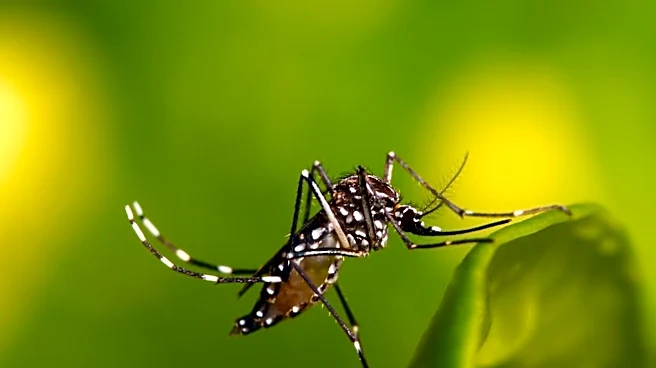
The Asian tiger mosquito, known for carrying diseases such as dengue, Zika, and chikungunya, is expanding its range northward into Connecticut and New England. The current mosquito monitoring infrastructure in these areas is fragmented and underfunded,
making it difficult for public health officials to track and prevent potential disease outbreaks. The monitoring system requires significant resources, including trained personnel, traps, and real-time data systems, which many states and counties cannot afford. This has resulted in a patchwork of monitoring efforts that leave gaps in data collection, allowing the mosquito population to spread unchecked. The expansion of the Asian tiger mosquito is driven by climate change, which is outpacing the capacity of public health agencies to respond effectively.
Why It's Important?
The northward expansion of the Asian tiger mosquito poses a significant public health threat as it increases the risk of disease outbreaks in areas previously unaffected. The lack of comprehensive monitoring systems means that local residents are often unaware of the risks in their neighborhoods, and public health agencies are unable to deploy targeted control measures in time. This situation highlights a broader issue in public health data infrastructure, where systems built for stable climates are now inadequate in the face of rapid ecological changes. Without improved monitoring and data sharing across jurisdictions, the risk of disease outbreaks will continue to grow, potentially overwhelming healthcare systems and affecting public health on a larger scale.
What's Next?
To address the monitoring gap, there is a need for increased funding and coordination among public health agencies to develop a unified, real-time data system that can track mosquito populations across state and county lines. This would enable more predictive and proactive responses to mosquito-borne disease threats. Additionally, public health initiatives should focus on educating residents about preventive measures and encouraging community participation in monitoring efforts. As climate change continues to drive the expansion of mosquito habitats, it is crucial for public health agencies to adapt their strategies and infrastructure to keep pace with these changes.