



What's Happening?
Two workers were killed and several others sustained minor injuries following explosions and a large fire at Brent Industries, an industrial recycling business in Toledo, Ohio, early Tuesday. The incident occurred shortly before 5 a.m. during a shift
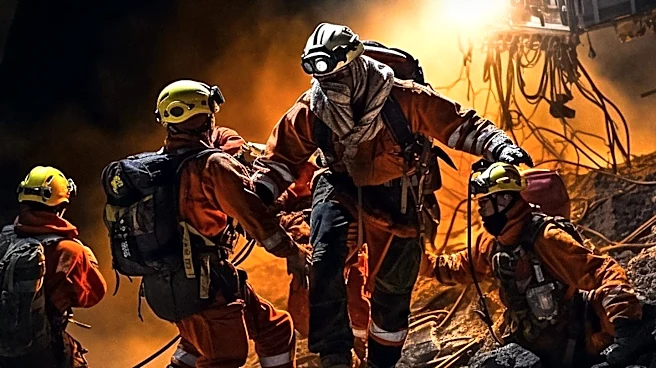
change. Fire Chief Allison Armstrong reported that crews discovered the bodies of a man and a woman inside the smoldering building. The explosions caused significant structural damage, with aerial images showing the roof largely destroyed and walls blown out. Emergency responders faced challenges including hazardous materials, runoff, and the risk of further explosions while conducting search and rescue operations. Environmental officials confirmed no hazardous threat in the air. The cause of the explosions is currently under investigation, with no preliminary indications available. The federal Occupational Safety and Health Administration (OSHA) has launched an investigation, which is expected to take up to six months.
Why It's Important?
This incident highlights critical safety concerns within industrial recycling operations, particularly those handling hazardous materials. The presence of mineral spirits, a petroleum solvent, at the Toledo plant, and the company's history of a fatal explosion in Alabama in 2015 involving similar substances, underscore the potential dangers. The ongoing OSHA investigation will be crucial in determining the cause and identifying any safety lapses, which could lead to new regulations or stricter enforcement for industrial facilities. The tragedy also brings attention to the broader issue of worker safety in industries dealing with volatile chemicals, emphasizing the need for robust safety protocols and emergency preparedness to prevent future incidents and protect employees. The economic impact includes potential operational disruptions for Brent Industries and increased scrutiny on similar businesses nationwide.
What's Next?
The federal Occupational Safety and Health Administration (OSHA) will continue its investigation into the cause of the explosions, with findings expected to be released within six months. This investigation will likely examine the handling of hazardous materials, specifically mineral spirits, and the adherence to safety regulations at the Brent Industries facility. Depending on the findings, the company could face citations and fines, similar to the 2015 incident at its Alabama location. Local authorities will also continue to monitor the site for any lingering environmental concerns. The incident may prompt a review of safety standards and emergency response protocols for industrial facilities in Ohio and potentially across the U.S., particularly those involved in chemical handling and recycling. The community will be awaiting the results of the investigation to understand the full scope of the incident and ensure accountability.
Beyond the Headlines
The recurring nature of industrial accidents at Brent Industries, including a prior fatal explosion in Alabama and past OSHA citations at the Toledo plant, raises deeper questions about corporate safety culture and regulatory oversight. The 2004 citation for failing to protect workers from a 207-degree Fahrenheit steam release suggests a pattern of safety deficiencies. This incident could reignite debates about the effectiveness of current OSHA regulations and enforcement mechanisms, particularly for companies with a history of violations. It also underscores the ethical responsibility of corporations to prioritize worker safety over operational efficiency, especially when dealing with inherently dangerous processes and materials. The long-term implications might include increased public demand for transparency in industrial safety records and potentially more stringent legislative measures to prevent such tragedies, influencing policy discussions on industrial safety and environmental protection.