
What's Happening?
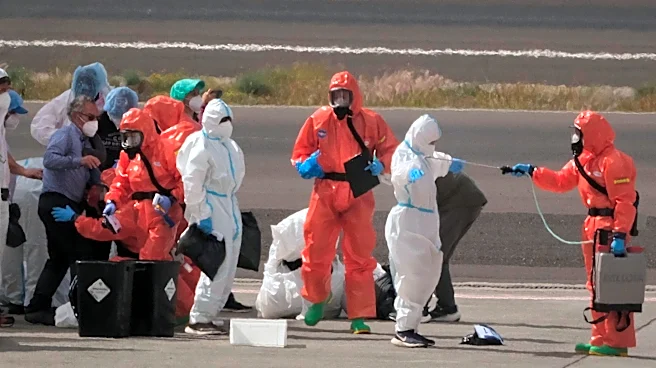
The World Health Organization (WHO) is managing a hantavirus outbreak linked to the cruise ship MV Hondius, which has resulted in 11 cases, including three deaths. The outbreak involves the Andes virus,
a strain known for human-to-human transmission, primarily in South America. The cases were reported among passengers from various countries, including the United States, France, and Spain. The outbreak was first notified to WHO on May 2, 2026, and since then, international contact tracing and epidemiological investigations have been underway. The WHO has assessed the global risk as low but continues to monitor the situation closely. The outbreak management includes case isolation, clinical management, and international contact tracing, with ongoing updates to recommendations as new data emerges.
Why It's Important?
This outbreak highlights the challenges of managing infectious diseases in confined environments like cruise ships, where close quarters can facilitate transmission. The hantavirus, particularly the Andes strain, poses significant health risks due to its high fatality rate and potential for human-to-human transmission. The situation underscores the importance of international cooperation in disease surveillance and response, as well as the need for robust public health measures to prevent outbreaks in similar settings. The response involves multiple countries and requires coordinated efforts to trace contacts and manage cases, demonstrating the interconnected nature of global health security.
What's Next?
The WHO and national health authorities will continue to monitor the situation, with further epidemiological investigations to determine the source and extent of the outbreak. The MV Hondius is en route to the Netherlands, where health monitoring of the remaining crew will continue. Authorities are also focusing on preventing further spread through quarantine measures and monitoring of high-risk contacts. The WHO is providing technical guidance and support to affected countries, and further updates to public health recommendations are expected as more information becomes available.