







What's Happening?
Iran has implemented a complex mechanism to control the passage of vessels through the Strait of Hormuz, a critical chokepoint for global oil supply. The system involves government-to-government agreements, intense vetting by the Iranian government, and
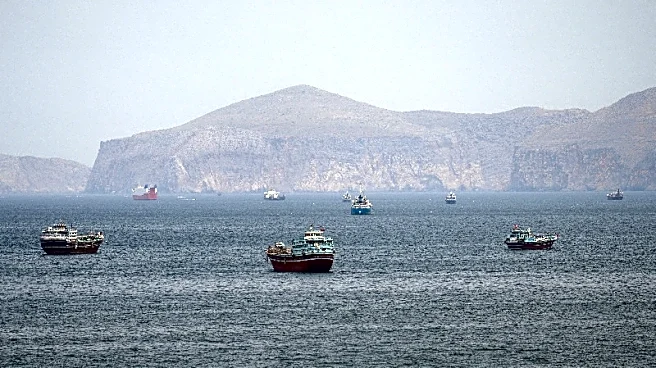
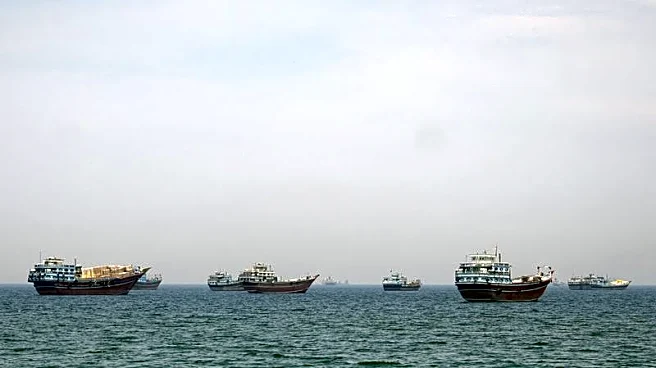
sometimes fees for safe passage. The Islamic Revolutionary Guard Corps (IRGC) plays a central role in this process. The Agios Fanourios I, a tanker carrying Iraqi crude oil, was allowed to pass through the strait after a direct deal with Iran, despite initial delays and inspections by the IRGC. This control has led to a significant bottleneck, with around 1,500 vessels trapped in the Gulf, affecting the global energy market.
Why It's Important?
The control of the Strait of Hormuz by Iran has significant implications for the global economy, particularly the energy sector. The strait is a vital passage for about a fifth of the world's oil supply. Iran's ability to regulate the flow of oil through this route can lead to increased oil prices and economic instability. The situation also highlights the geopolitical tensions in the region, as the U.S. and its allies navigate the challenges posed by Iran's strategic maneuvers. The potential for conflict or further economic sanctions could exacerbate the situation, affecting global markets and international relations.
What's Next?
The U.S. has responded by imposing a blockade on Iranian ships and cargo outside the strait, which could lead to further diplomatic tensions. Countries with vessels trapped in the Gulf may seek diplomatic solutions or negotiate directly with Iran to secure passage. The international community will likely monitor the situation closely, as any escalation could have widespread economic and political repercussions. The ongoing negotiations and potential for retaliatory actions by Iran could further complicate the geopolitical landscape.
Beyond the Headlines
Iran's control over the Strait of Hormuz raises questions about the legality of charging for safe passage under international maritime law. The situation also underscores the influence of the IRGC in Iran's strategic decisions, which could have long-term implications for regional security and international maritime law. The willingness of ship owners to negotiate with Iran despite the risks highlights the economic pressures and the strategic importance of the strait.