






What's Happening?
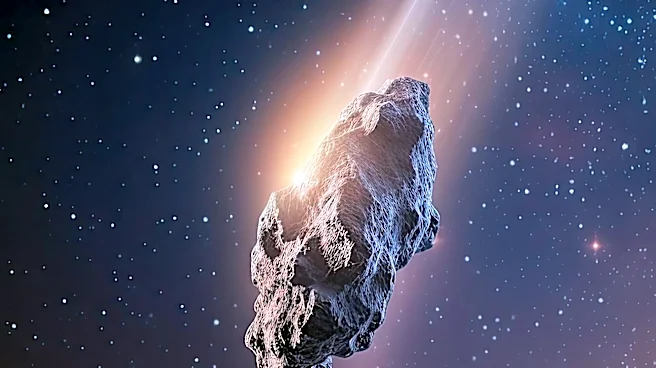
Asteroid (152637) 1997 NC1 is set to make its closest approach to Earth in 400 years on June 27, passing at a distance of 2.56 million kilometers. The European Space Agency confirms that the asteroid, with a diameter between 700 meters and 1.6 kilometers,
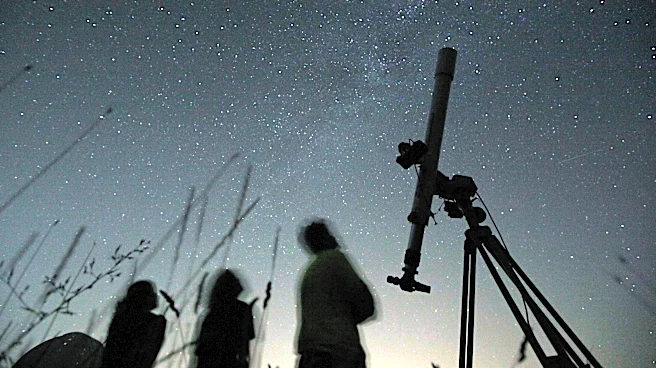
poses no threat to Earth. It will be visible through telescopes and binoculars, appearing as a small point of light moving slowly among the stars. The asteroid will remain visible for several days, although its brightness will decrease over time.
Why It's Important?
The close approach of asteroid 1997 NC1 provides a valuable opportunity for astronomers to study a near-Earth object. Observations can yield insights into the asteroid's composition, trajectory, and potential future interactions with Earth. For the public, it offers a chance to engage with astronomy and witness a celestial event. The event underscores the importance of monitoring near-Earth objects to assess potential threats and develop strategies for planetary defense.
What's Next?
Astronomers will continue to observe the asteroid as it passes by Earth, collecting data that could inform future research and monitoring efforts. The event may also inspire educational initiatives and public interest in space science. As the asteroid moves away, its visibility will decrease, but the data collected during its approach will contribute to ongoing studies of near-Earth objects and their potential impact on our planet.