
What's Happening?
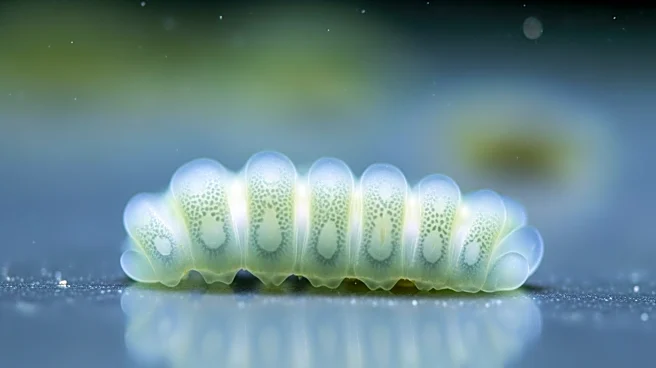
Researchers have discovered that severed body parts of the sea cucumber, Psolus fabricii, can survive and heal themselves for over three years in a lab setting, without developing into new organisms. These
tissue fragments, referred to as 'zombies' by researchers, maintain cellular function indefinitely, absorbing nutrients without a mouth. This discovery, published in Science Advances, suggests a new model for medical research, offering a potential alternative to HeLa cells, which are human cells that can grow indefinitely but raise ethical concerns due to their origin. The study was led by Sara Jobson, who noted the sea cucumber's high regenerative capacity and the unexpected survival of its tissues.
Why It's Important?
The findings could revolutionize medical research by providing a new source of 'immortal' cells that thrive in natural conditions without ethical constraints. This could lead to advancements in understanding regeneration, wound healing, and tissue maintenance. The sea cucumber cells could potentially replace HeLa cells, which have been controversial due to their unethical acquisition. The ability of these cells to survive in non-sterile environments also opens up possibilities for studying ocean health and the impact of environmental changes. This research challenges existing assumptions about what it means to be 'alive' and could have significant implications for cell biology and medical research.
What's Next?
Further research is needed to confirm the immortality of the sea cucumber tissues by examining their DNA structure to determine if they age after replicating. If confirmed, these cells could be used in various applications, including testing the effects of rising temperatures or pathogens in seawater. Researchers may also explore the processes or chemicals that enable these cells to heal and survive, which could lead to new insights into tissue behavior and dynamics. The study's findings could inspire additional research into other invertebrates with regenerative abilities, potentially expanding the scope of medical and environmental research.