




What's Happening?
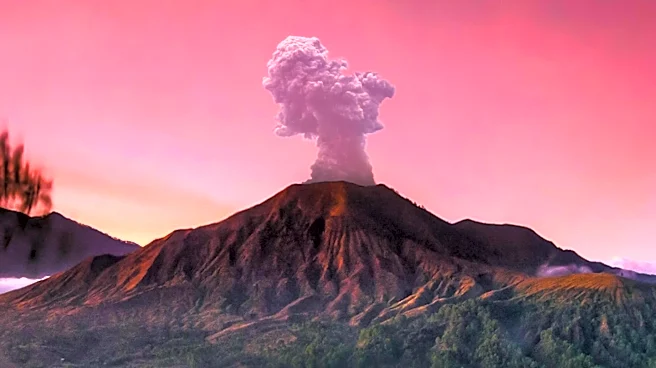
Posts circulating on social media falsely claimed that toxic sulfur dioxide (SO2) from the eruption of Mount Anak Krakatau in Indonesia was entering Malaysian airspace, exacerbating the country's hazardous air quality. These claims cited satellite imagery
showing high SO2 levels. However, volcanology experts and Malaysia's Meteorological Department have debunked these assertions. Experts clarified that satellite imagery measures SO2 in the atmosphere's vertical column, not at ground level, and therefore does not accurately reflect the air people are breathing. The Malaysian Meteorological Department confirmed that volcanic ash from the eruption is moving towards the Indian Ocean, not towards Malaysia. The actual cause of Malaysia's poor air quality was attributed to haze from forest and peatland fires in Indonesia.
Why It's Important?
The spread of misinformation regarding environmental hazards, such as volcanic eruptions and air quality, can lead to unnecessary public alarm and divert attention from real threats. In this case, false claims about SO2 from Mount Anak Krakatau could have caused panic among the Malaysian public, while the actual and significant threat of haze from forest fires was being addressed. For U.S. industries and public policy, this highlights the critical need for accurate scientific communication and robust fact-checking mechanisms, especially in an era where climate and environmental concerns are paramount. Misinformation can undermine public trust in scientific institutions and government advisories, making it harder to implement effective public health and environmental protection measures, both domestically and internationally.
What's Next?
Authorities and scientific bodies will likely continue to monitor and debunk false claims related to natural disasters and environmental issues. Public education campaigns on media literacy and critical evaluation of online information are crucial to counter the spread of misinformation. Social media platforms may face increased pressure to implement stricter policies regarding the dissemination of unverified content, particularly concerning public safety and health. The incident also underscores the ongoing challenge of managing transboundary environmental issues, such as haze from fires, which require international cooperation and accurate information sharing to mitigate their impact on affected populations.
Beyond the Headlines
This event reveals a broader vulnerability in the digital age: the ease with which scientific data, such as satellite imagery, can be misinterpreted or deliberately misused to create alarmist narratives. The incident highlights the importance of understanding the nuances of scientific measurements and the limitations of data presented out of context. It also touches upon the psychological impact of environmental anxieties, where the public may be more susceptible to believing worst-case scenarios, especially when combined with existing concerns like the haze. This situation calls for a more proactive approach from scientific communities to communicate complex data in an accessible and accurate manner, thereby building resilience against misinformation and fostering informed public discourse on environmental challenges.