
What's Happening?
A federal judge in San Jose, California, U.S. District Judge Noel Wise, has ruled that the Trump administration's use of federal immigration laws to cancel visas and initiate deportation proceedings against
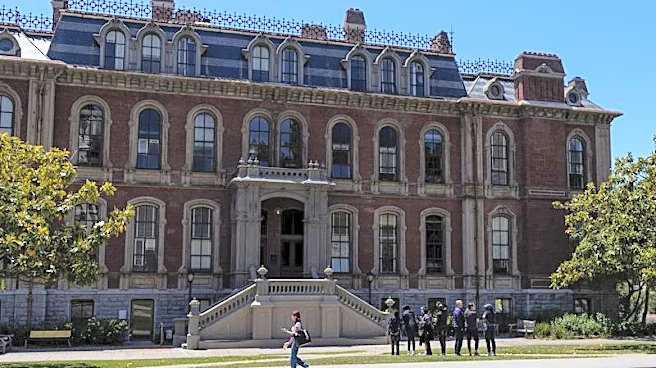
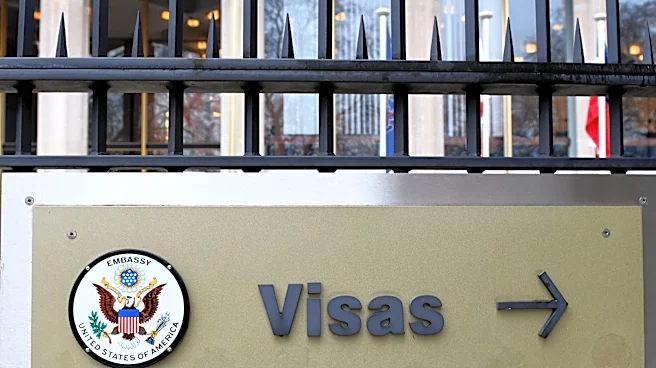
noncitizen college students for their pro-Palestinian advocacy and criticism of Israel is unconstitutional. The ruling, issued on Friday, August 28, 2026, criticized the U.S. State Department and U.S. Department of Homeland Security (DHS) for targeting non-citizens based on their expressed views. Judge Wise, an appointee of Democratic President Joe Biden, emphasized that free speech, including criticism of the government, is a cornerstone of U.S. democracy, and this strength is diminished when individuals feel compelled to self-censor to avoid government retaliation. The case stemmed from a lawsuit filed in August 2025 by The Stanford Daily, Stanford University's student newspaper, which alleged that some of its writers with student visas had refrained from covering pro-Palestinian protests and Middle East conflict topics due to the administration's policies. The lawsuit challenged two provisions of the Immigration and Nationality Act that allowed the Secretary of State to deem noncitizens deportable if their actions compromised a compelling foreign policy interest or to revoke visas at discretion.
Why It's Important?
This ruling is significant as it reaffirms the constitutional protection of free speech for both citizens and noncitizens within the United States, even when that speech is critical of government policies or foreign relations. It sets a precedent against the use of immigration laws as a tool to suppress dissenting viewpoints, particularly concerning sensitive international issues like the Israeli-Palestinian conflict. The decision underscores the judiciary's role in safeguarding civil liberties against executive overreach. For academic institutions and student organizations, it provides a clearer framework for protecting the rights of their international students and faculty to engage in political discourse without fear of deportation. Conversely, it represents a setback for government efforts to control narratives or actions perceived as detrimental to foreign policy interests through immigration enforcement. The ruling could influence future immigration policies and how the U.S. government interacts with foreign nationals expressing political opinions.
What's Next?
The U.S. State Department and DHS have not yet responded to requests for comment regarding the ruling. It is possible that the Trump administration, or a future administration, could appeal Judge Wise's decision. However, the ruling aligns with a similar decision made last year by U.S. District Judge William Young in Boston, which also found the administration's policy of revoking visas and deporting foreign students and faculty for pro-Palestinian advocacy to be unconstitutional. These consistent judicial interpretations suggest a strong legal basis for protecting such speech. The Foundation for Individual Rights and Expression (FIRE), which represented The Stanford Daily, views this as a victory for free speech, indicating they will likely continue to monitor and challenge any attempts to suppress protected expression. The ruling may encourage more open political discourse on U.S. campuses among noncitizen students and faculty, potentially leading to increased activism on various international and domestic issues.
Beyond the Headlines
This judicial decision delves into the fundamental tension between national security interests, foreign policy objectives, and the constitutional right to free speech. Judge Wise's concern that the administration might eventually target individuals for expressing any disfavored views highlights a broader ethical and legal debate about the scope of government power in a democratic society. The ruling implicitly questions the extent to which the U.S. government can leverage immigration status to control political expression, particularly when such expression is critical of its policies. It reinforces the idea that the U.S. Constitution's protections are not solely for citizens but extend to noncitizens within its borders, especially concerning fundamental rights like free speech. This case could contribute to a re-evaluation of how immigration laws are applied in contexts involving political advocacy, potentially leading to more robust protections for noncitizens' expressive rights and fostering a more inclusive environment for diverse viewpoints.