



What's Happening?
Cellula Robotics, a company based in Burnaby, British Columbia, has been selected to participate in the Canadian Technology Accelerators Maritime Defence and Security Applications of Ocean Technologies program in the United Kingdom. This initiative, led
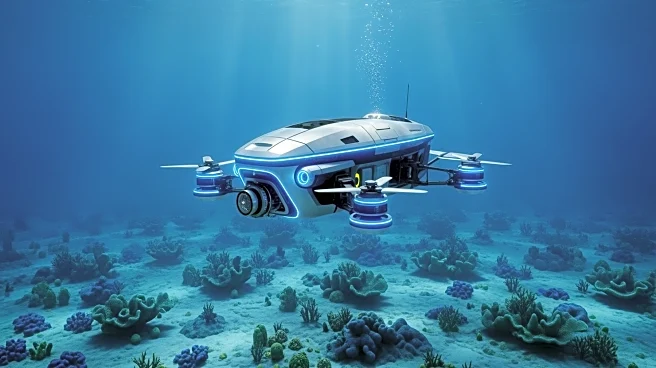
by the High Commission of Canada in the UK and delivered alongside BMNT, aims to support Canadian companies in developing ocean technologies that align with the defense priorities of both nations. The program facilitates direct engagement between Canadian innovators and UK stakeholders, fostering operational alignment and the development of long-term capabilities in response to evolving maritime security challenges. In March, Cellula will join other Canadian ocean technology firms in London to explore collaboration opportunities with UK defense and industry partners. The company specializes in hydrogen fuel cell-powered and long-endurance Autonomous Underwater Vehicle (AUV) platforms, designed for missions such as under-ice ISR, subsea monitoring, mine warfare, and infrastructure inspection.
Why It's Important?
The participation of Cellula Robotics in this program underscores the importance of international collaboration in addressing shared maritime security challenges. By engaging with UK defense and industry partners, Cellula aims to integrate advanced subsea technologies in ways that are operationally credible and aligned with allied priorities. This collaboration could lead to enhanced capabilities in maritime defense, benefiting both Canadian and UK defense sectors. The program also highlights the strategic importance of subsea technology in modern defense, as it supports a wide range of applications from geophysical surveys to the protection of critical infrastructure. The initiative reflects a broader trend of leveraging international partnerships to advance technological innovation in defense.
What's Next?
As Cellula Robotics and other Canadian firms engage with UK partners, the next steps will likely involve detailed discussions on specific collaboration projects and technology integration. The outcomes of these engagements could lead to joint ventures or partnerships that enhance the operational capabilities of both nations' maritime defense sectors. Additionally, the program may serve as a model for future international collaborations in other areas of defense technology, potentially expanding to include more countries and a wider range of technologies.