





What's Happening?
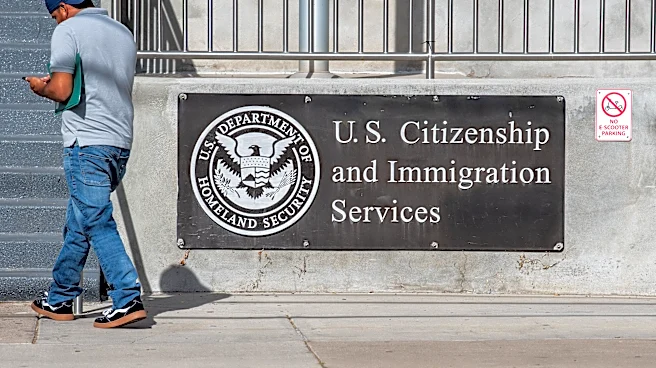
U.S. Citizenship and Immigration Services (USCIS) has issued new guidance that broadens the scope of its 'good moral character' assessment for citizenship applicants. The agency will now consider public benefits-related conduct and financial responsibilities
when evaluating applications. While legally receiving public benefits does not automatically disqualify an applicant, USCIS officers may take into account instances of benefits fraud, failure to support dependents, and unmet financial sponsorship obligations. To facilitate this expanded review, USCIS plans to update Form N-400, the Application for Naturalization, to collect additional information regarding public benefits and dependent support. The agency emphasizes that officers must evaluate each applicant's circumstances individually, ensuring a case-by-case assessment of their moral character.
Why It's Important?
This expanded guidance from USCIS is significant as it introduces new criteria that could impact the eligibility of many individuals seeking U.S. citizenship. By scrutinizing public benefits and financial responsibilities more closely, the agency is potentially raising the bar for naturalization, particularly for those who have utilized public assistance programs or have had financial difficulties. This move could disproportionately affect lower-income immigrants or those who have faced economic hardship, potentially creating additional barriers to citizenship. The requirement for individual assessment aims to prevent blanket disqualifications, but the increased scrutiny could lead to longer processing times and more complex application reviews. This policy shift reflects a broader trend of tightening immigration standards and could influence how immigrants interact with social safety net programs, potentially deterring them from seeking necessary assistance due to concerns about future citizenship prospects.
What's Next?
USCIS will proceed with updating Form N-400 to incorporate the new data collection requirements related to public benefits and dependent support. Applicants for naturalization will need to be prepared to provide more detailed information on these aspects of their lives. The implementation of this guidance will likely lead to increased scrutiny during citizenship interviews, with officers delving deeper into applicants' financial histories and their use of public services. Advocacy groups and legal aid organizations are expected to monitor the impact of these changes closely, potentially offering guidance to applicants and challenging specific interpretations of the 'good moral character' standard. The long-term effects could include a decrease in naturalization rates among certain demographics and a re-evaluation by immigrants of their engagement with public assistance programs.
Beyond the Headlines
The expanded 'good moral character' review touches upon fundamental questions about the criteria for belonging and integration into American society. By linking citizenship eligibility to financial self-sufficiency and responsible use of public resources, the policy implicitly reinforces certain societal values. This approach could spark debates about the role of the state in assessing individual financial conduct as a prerequisite for citizenship, and whether such criteria align with principles of fairness and equal opportunity. Furthermore, it raises ethical considerations regarding the potential chilling effect on immigrants seeking legitimate public assistance, fearing that doing so could jeopardize their path to citizenship. The policy could also contribute to a broader narrative about immigrant contributions and responsibilities, influencing public perception and political discourse around immigration reform.