



What's Happening?
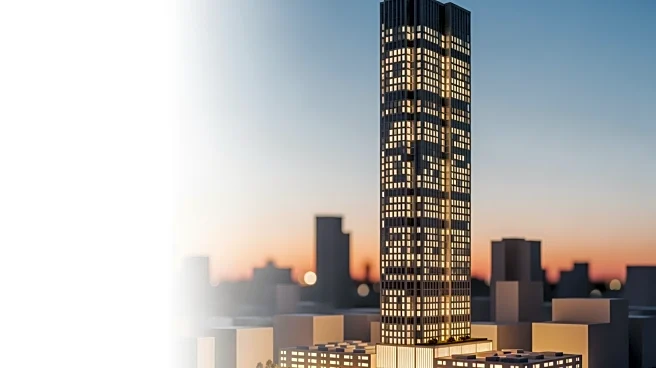
The New York City Council has approved a significant development project in Downtown Brooklyn, which involves transforming a city-owned office building into a 72-story mixed-use tower. This new skyscraper, set to become the second-tallest building in the borough,
will include over 1,200 housing units, with 325 designated as affordable housing. The project, developed by Rabina and Park Tower Group and designed by TenBerke Architects, will replace the existing seven-story office building at 385 Flatbush Avenue Extension. The development will feature 1.23 million square feet of residential space and 210,000 square feet of office, retail, and community facilities. Additionally, the project will include a 4,750-square-foot public plaza, streetscape improvements, and enhanced access to the DeKalb Avenue subway station.
Why It's Important?
This development is significant as it addresses the critical need for affordable housing in New York City, particularly in a high-demand area like Downtown Brooklyn. By setting aside 325 units for affordable housing, the project aims to provide more accessible living options for families earning an average of 60 percent of the area median income. The inclusion of retail and community spaces also promises to boost local economic activity and provide essential services. Furthermore, the project aligns with the city's broader urban development goals, as it takes advantage of the recently lifted cap on residential density, allowing for a higher floor area ratio. This could set a precedent for future developments in the city, promoting more efficient use of urban space.
What's Next?
The project is expected to proceed with construction, with developers planning to apply for the 485x property tax incentive, which mandates higher wages for construction workers due to the project's size and location. The developers have also committed to a 25 percent participation of Minority and Women-owned Business Enterprises (MWBE) and meeting the city's labor standards for building operations. The all-electric design of the building reflects a commitment to sustainable development practices. As the project progresses, it will be closely watched by stakeholders interested in urban development, affordable housing, and sustainable building practices.