
What's Happening?
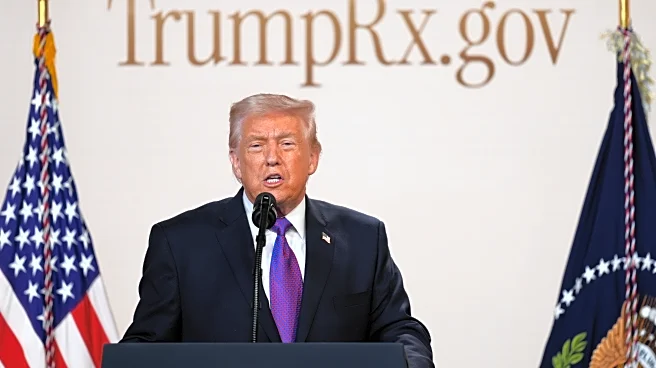
President Donald Trump has signed an executive order aimed at restricting states from regulating artificial intelligence (AI) companies. The order seeks to prevent states from implementing laws that could
hinder AI companies' operations, arguing that such regulations could deter these companies from operating in the United States. The order directs Attorney General Pam Bondi to establish an 'AI Litigation Task Force' to challenge state laws that conflict with the administration's vision for minimal regulation. Additionally, Commerce Secretary Howard Lutnick is tasked with identifying state laws that require AI models to alter their outputs, with states potentially needing to agree not to enforce these laws to receive federal funding. This move follows unsuccessful attempts to pass similar federal legislation, highlighting ongoing debates over the balance between state and federal regulation of AI.
Why It's Important?
The executive order represents a significant shift in the regulatory landscape for AI in the United States. By centralizing regulatory authority at the federal level, the Trump administration aims to create a more uniform regulatory environment, potentially making the U.S. more attractive to AI companies. However, this approach has sparked criticism from those who believe it undermines states' rights to protect their citizens from potential AI-related harms. The order could lead to legal challenges from states that wish to maintain their regulatory frameworks. The broader impact on the AI industry could include increased investment and innovation due to reduced regulatory burdens, but it also raises concerns about the adequacy of federal oversight in addressing ethical and safety issues associated with AI technologies.
What's Next?
The establishment of the AI Litigation Task Force and the identification of conflicting state laws are immediate next steps following the executive order. States with existing AI regulations may face pressure to align with federal standards or risk losing federal funding. Legal battles are likely as states challenge the federal government's authority to override their laws. The outcome of these disputes could set important precedents for the division of regulatory power between state and federal governments. Additionally, the AI industry will be closely monitoring these developments to assess the potential impact on their operations and compliance strategies.