




What's Happening?
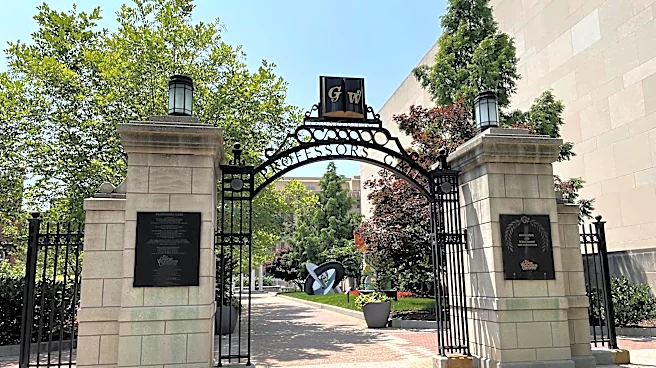
George Washington University (GW) has been selected as one of four major research hubs in an international network dedicated to advancing green chemistry. Directed by Jakub Kostal, associate professor of chemistry at GW, the university will lead the Safer
Molecular Design Hub. This initiative is backed by over $40 million in grants from the Gordon and Betty Moore Foundation, part of its expanded Green Chemistry Initiative totaling $196.25 million over 10 years. The GW hub will focus on integrating artificial intelligence and quantum chemistry to embed safety into chemical design from the outset, aiming to create safer and more sustainable chemicals. The broader network includes 19 universities and research institutes across eight countries, with other hubs focusing on Adaptive Catalytic Systems, Weak Interactions, and Complex Mixtures.
Why It's Important?
This significant investment in green chemistry research at George Washington University has profound implications for U.S. industries and public policy. By leading the Safer Molecular Design Hub, GW will be at the forefront of developing methodologies to design chemicals that are inherently safer for human health and the environment. This proactive approach aims to prevent the creation of harmful substances, reducing the need for costly and often insufficient remediation efforts later. For U.S. industries, particularly manufacturing and chemical sectors, this research could lead to the development of new, environmentally friendly products and processes, potentially enhancing competitiveness and reducing regulatory burdens. It also aligns with growing public demand for sustainable practices and could influence future environmental regulations and corporate responsibility standards, benefiting both consumers and the planet.
What's Next?
The GW Safer Molecular Design Hub will immediately begin its research, combining artificial intelligence and quantum chemistry to develop a comprehensive framework for chemical design. The hub will collaborate with other international research institutions, sharing discoveries, data, and tools to accelerate advancements in green chemistry. The findings from this research are expected to be published and shared widely, providing a knowledge base for other researchers, companies, and startups to build upon. This initiative is poised to drive generational change in the field, with the potential to transform how chemicals are designed and produced globally. Future developments will likely include new patents, industry partnerships, and the integration of these green chemistry principles into educational curricula.
Beyond the Headlines
The establishment of the Safer Molecular Design Hub at GW highlights a critical shift in scientific and industrial paradigms: moving from reactive risk assessment to proactive, inherent safety in chemical design. This initiative addresses the ethical imperative to protect human and environmental health by preventing pollution and toxicity at the source, rather than managing its consequences. It also underscores the growing recognition of artificial intelligence and quantum chemistry as powerful tools for scientific discovery and problem-solving. The long-term implications could include a fundamental re-evaluation of chemical manufacturing processes, a reduction in hazardous waste, and the emergence of entirely new classes of materials that are both high-performing and benign. This represents a significant step towards a more sustainable and responsible technological future.