
What's Happening?
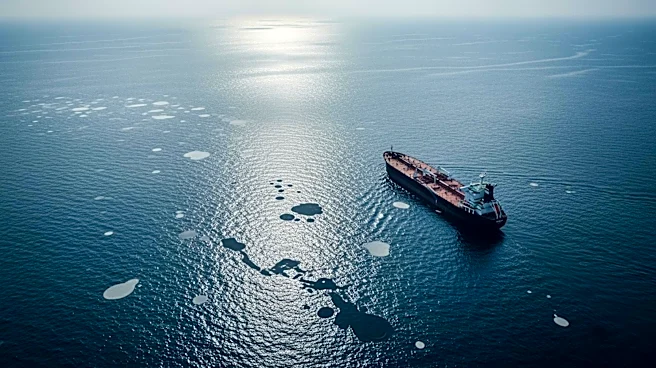
The Strait of Hormuz, a critical chokepoint for global energy supplies, is experiencing a significant disruption as oil producers and tanker owners are unable to agree on risk management for shipping routes.
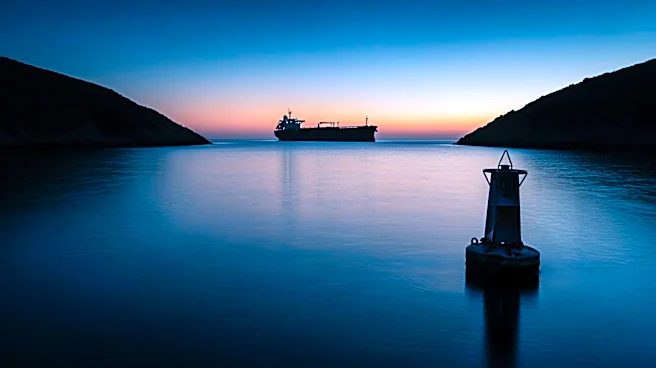
This standoff has resulted in minimal vessel bookings, as both parties demand the other assume the risk of crossing the strait. The conflict, now in its seventh week, has made shipping through this vital passage intolerably risky. Some oil companies have attempted to charter tankers, insisting on guarantees for timely loading and safe passage, but shipowners find these demands unrealistic. The disagreement has led to a near halt in agreements to load oil within the Persian Gulf. A few ships have managed to navigate the strait by staying close to the coasts of Iran or Oman or by turning off their satellite transponders to avoid detection.
Why It's Important?
The ongoing crisis in the Strait of Hormuz has significant implications for global energy markets and geopolitical stability. As a major transit route for oil, any disruption can lead to increased oil prices and economic uncertainty. The inability to reach an agreement on risk management between oil producers and tanker owners could exacerbate tensions in the region, potentially leading to further economic and political instability. The current situation highlights the vulnerability of global energy supply chains to geopolitical conflicts and the need for robust risk management strategies. The increased costs associated with shipping through the strait, as evidenced by the rise in vessel-hire rates, could also impact global oil prices and economic conditions.
What's Next?
Until the standoff between charterers and shipowners is resolved, the resumption of normal shipping flows through the Strait of Hormuz remains unlikely. The ongoing conflict may prompt international diplomatic efforts to mediate a resolution, as the economic stakes are high for countries dependent on oil imports. Additionally, oil companies and shipping firms may explore alternative routes or risk mitigation strategies to ensure the continuity of energy supplies. The situation may also lead to increased pressure on governments to address the underlying geopolitical tensions contributing to the crisis.