



What's Happening?
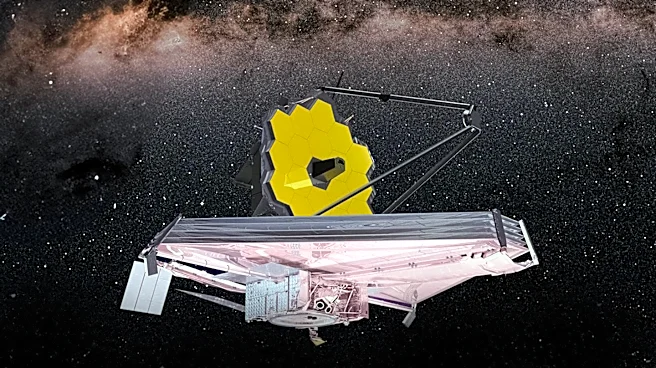
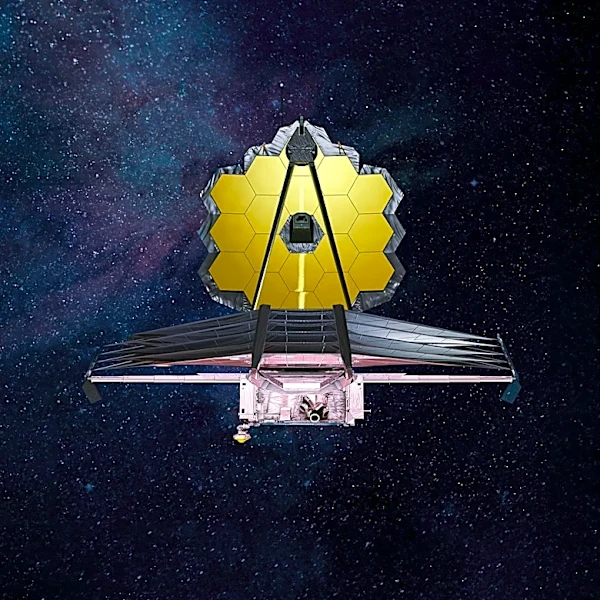
Scientists are making significant progress in understanding the unusual magnetic fields of Uranus and Neptune, a puzzle that has persisted for 40 years. Researchers, including Tom Stallard of Northumbria University, are utilizing observations from the James
Webb Space Telescope (JWST) to study the faint infrared auroral lights on both ice giants. Aurorae are formed when charged particles from the solar wind interact with a planet’s magnetic field, directing these particles into the atmosphere above the magnetic poles. The location and structure of these aurorae provide crucial insights into the planets' magnetic fields. By combining JWST data with magnetic-field measurements from Voyager 2, taken in the 1980s, and advanced computer simulations, scientists aim to determine the current configuration of these magnetic fields and compare them to past observations. This research is shedding light on the internal dynamics of these distant planets, which are substantially larger than Earth and possess extreme internal pressures and temperatures that cause water molecules to break apart and become electrically conductive.
Why It's Important?
Understanding the magnetic fields of Uranus and Neptune is vital for advancing planetary science and our comprehension of how planets generate and maintain their magnetic dynamos. Earth's magnetic field is relatively stable, with its tilt drifting only slightly over decades. In contrast, the ice giants exhibit highly dynamic magnetic fields, with tilts that can swing by tens of degrees within decades, as indicated by new models. This research challenges existing assumptions about planetary magnetic fields and provides a unique opportunity to test new models against observational data. The insights gained could refine our understanding of planetary evolution and the conditions necessary for magnetic field generation, which is a fundamental aspect of planetary habitability and atmospheric protection. Furthermore, this scientific endeavor highlights the critical role of advanced space telescopes like JWST in pushing the boundaries of astronomical discovery and contributing to the broader U.S. space exploration agenda.
What's Next?
Scientists are actively working on analyzing the detailed observations from the JWST regarding the shape and structure of the aurorae and other patterns in the ionosphere of Uranus and Neptune. The next step involves integrating these new observations with the historical Voyager 2 data and the results from computer simulations. This combined approach is expected to provide a more accurate estimation of the current magnetic field configurations of both planets. NASA has prioritized a new mission to Uranus, slated for the early 2040s, which will offer direct measurements and further validate these models. Additionally, the China National Space Administration’s Tianwen-4 mission, launching in 2029, will deploy a probe to Uranus, providing another opportunity for in-situ data collection. These future missions will be crucial for experimentally testing the new models and confirming the dynamic nature of the ice giants' magnetic fields.
Beyond the Headlines
The ongoing research into the magnetic fields of Uranus and Neptune has profound implications beyond immediate scientific understanding. The extreme conditions within these ice giants, where water molecules become electrically conductive, offer a natural laboratory for studying matter under immense pressure and temperature, potentially revealing new states of matter. The dynamic and rapidly changing magnetic fields of these planets also raise questions about the long-term stability of planetary environments and the factors that influence the evolution of planetary atmospheres. This research could inform our search for exoplanets with similar characteristics and help us identify potential candidates for life beyond Earth. Moreover, the collaborative effort involving international scientists and advanced space observatories underscores the global nature of scientific inquiry and the shared human endeavor to explore and understand the cosmos.