
What's Happening?
A family from Goffstown, New Hampshire, made a rare discovery during a fishing trip off the coast of Rye: a pregnant blue lobster. The Major family was on a charter fishing boat when they found a fishing pole
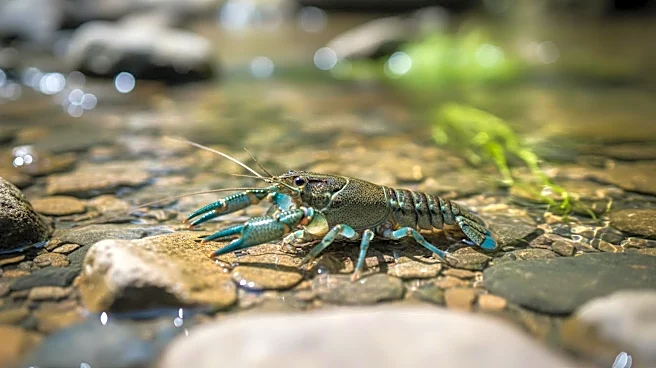
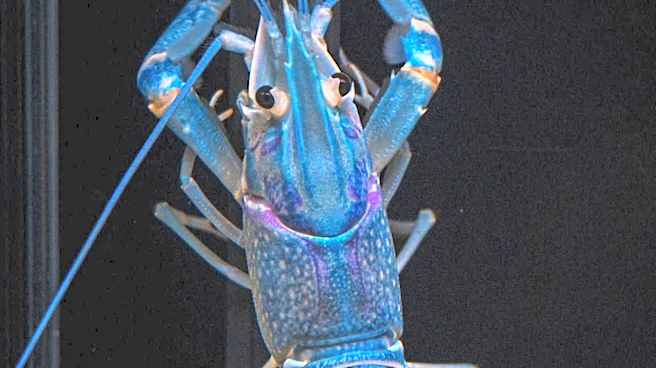
and line in the water, with the lobster entangled in it. Initially, the lobster appeared normal, but upon closer inspection on the boat, they realized its unusual blue coloration. The surprise deepened when they discovered the lobster was carrying eggs. Experts, including Dr. Sue Cooke from UNH, estimate the chances of finding a blue lobster to be about one in two million, while the probability of encountering a pregnant blue lobster is considered a one-in-a-billion occurrence. The blue color is attributed to an excess of a pigment called crustacyanin, which accumulates in the shell and binds to dietary pigments. The fishermen notched the lobster's tail, a practice that signals it is a reproductively viable female and should be released to contribute to the lobster population.
Why It's Important?
This extraordinary find holds significant importance for marine biology and conservation efforts in the Gulf of Maine. The rarity of a pregnant blue lobster provides valuable data for researchers studying lobster genetics, pigmentation, and reproductive patterns. Such discoveries can contribute to a deeper understanding of biodiversity within marine ecosystems and the factors influencing genetic mutations or expressions in species. For the New Hampshire fishing industry, which relies heavily on lobster populations, the responsible action of notching and releasing the pregnant lobster underscores a commitment to sustainable fishing practices and the long-term health of the fishery. This event also serves as a powerful educational tool, raising public awareness about marine conservation, the unique characteristics of local wildlife, and the importance of protecting reproductively active individuals. It highlights the ongoing efforts by fishermen and scientists to maintain healthy and diverse marine populations, which are crucial for both ecological balance and economic stability in coastal communities.
What's Next?
The pregnant blue lobster, having been notched and released, will continue its role in the marine ecosystem, hopefully contributing to the lobster population. The notching ensures that if caught again, it will be recognized as a breeding female and released, protecting its reproductive potential. This event may spark increased interest in marine research, particularly regarding lobster genetics and the prevalence of such rare colorations. Scientists like Dr. Sue Cooke from UNH may use this information to further their studies on crustacyanin and its role in lobster pigmentation. The story could also inspire local conservation initiatives or educational programs aimed at promoting responsible fishing practices and marine stewardship among the public and younger generations. While the immediate impact is on the individual lobster, the broader implications could lead to enhanced data collection on rare marine species and a reinforced commitment to protecting the biodiversity of New Hampshire's coastal waters. The unique nature of the find may also draw attention to the region's marine life, potentially boosting eco-tourism or local interest in marine science.
Beyond the Headlines
The discovery of a pregnant blue lobster transcends a mere biological anomaly; it touches upon the delicate balance of marine ecosystems and the human role in their preservation. The 'one-in-a-billion' rarity of this find serves as a vivid reminder of the vast, often unseen, genetic diversity within our oceans. It prompts deeper questions about environmental factors that might influence such genetic expressions and whether changes in ocean conditions could impact the prevalence of these unique traits. Ethically, the decision by the fishermen to notch and release the lobster highlights a growing consciousness within the fishing community towards conservation, moving beyond purely extractive practices to embrace stewardship. This act reinforces the idea that economic activities can coexist with ecological responsibility. Culturally, such a rare and visually striking creature can become a symbol, fostering a sense of wonder and connection to the natural world, potentially inspiring greater public engagement in marine conservation efforts. It underscores the intrinsic value of biodiversity, not just for scientific study or economic benefit, but for its inherent beauty and the mystery it adds to our understanding of life on Earth.