





What's Happening?
Vitalik Buterin, co-founder of Ethereum, has publicly supported the anti-data center movement, arguing that a slower pace of compute growth for artificial intelligence (AI) would provide crucial time to fortify global defenses against potential AI-driven
cyber and bio risks. Buterin expressed this view in an X post on November 8, stating his disagreement with the strong emotional reactions to anti-data center groups. He believes that algorithmic progress means what larger data centers could achieve in two years, current ones could manage in four, or even sooner. Therefore, he contends that even significant success by the anti-data center movement would not lead to a disaster. Buterin highlighted that cybersecurity issues are already apparent, with bio risks potentially emerging soon, necessitating more time for preparation. He also noted that delaying AI by a year would have a minimal impact on overall research, as science faces numerous bottlenecks beyond AI.
Why It's Important?
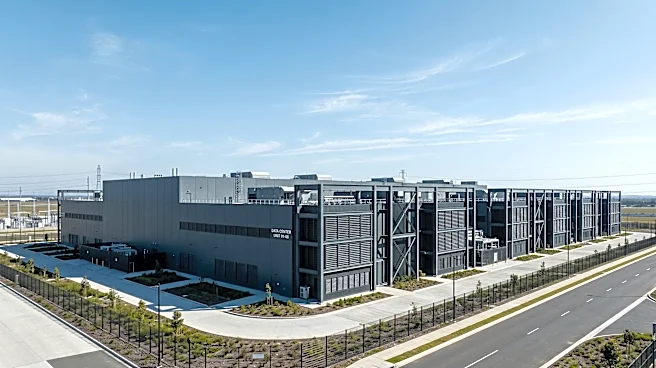
Buterin's stance carries significant weight due to his influence in the technology sector, particularly in cryptocurrency. His advocacy for slowing AI development directly challenges the rapid expansion currently favored by many tech giants and investors. This perspective could influence policy discussions and public opinion regarding AI regulation and infrastructure development. The anti-data center movement, which has seen protests and policy calls like Senator Bernie Sanders' proposal for a national data center moratorium, could gain further momentum. A slowdown in data center construction, as warned by BlackRock CEO Larry Fink, could potentially lead to an economic recession, impacting AI chip stocks and Bitcoin miners that rely on a fast buildout. This debate highlights a growing tension between technological advancement and societal preparedness for its potential consequences, with economic stakeholders facing uncertainty depending on the trajectory of AI development.
What's Next?
The debate surrounding AI development speed and data center expansion is likely to intensify. With figures like Buterin and Senator Bernie Sanders advocating for a more cautious approach, there could be increased pressure for regulatory bodies to consider moratoriums or stricter controls on data center construction. Conversely, industry leaders like Larry Fink will continue to emphasize the economic benefits of rapid AI advancement, potentially lobbying against such restrictions. The outcome of this ideological clash will significantly impact the growth trajectory of the AI sector, the profitability of companies invested in AI infrastructure, and the broader economic landscape. Future policy decisions, particularly in the U.S. and Europe, will be critical in determining whether the buildout continues at its current pace or if a more measured approach is adopted to address potential risks.
Beyond the Headlines
Buterin's argument extends beyond immediate economic or technological concerns, touching upon fundamental questions of societal resilience and ethical responsibility in the face of rapidly evolving AI. His focus on 'hardening the world' against AI-driven risks suggests a deeper concern for long-term global security and human well-being. This perspective introduces an ethical dimension to the AI development conversation, urging a re-evaluation of the 'move fast and break things' ethos often prevalent in tech. The discussion also highlights the interconnectedness of various technological domains, as AI's potential to crack crypto, as Buterin previously warned, underscores the systemic risks posed by unchecked technological progress. This broader implication suggests a shift towards a more holistic and cautious approach to technological innovation, considering not just its benefits but also its potential for widespread disruption and harm.