







What's Happening?
The Supreme Court has ruled that the president has broad authority to remove the heads of independent federal agencies, a decision that could significantly alter the balance of power within the executive branch. This ruling, stemming from the case Trump
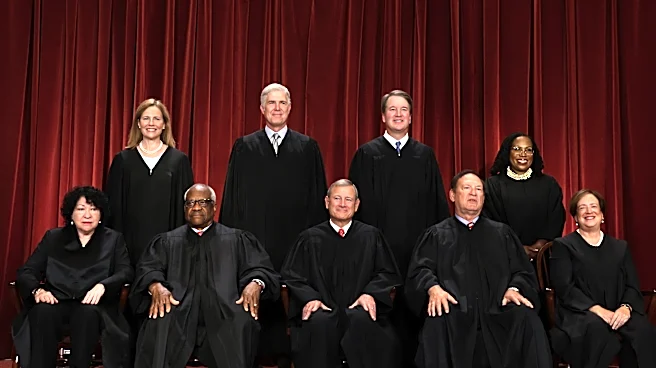
v. Slaughter, was delivered by Chief Justice John Roberts and supported by a 6-3 majority. The decision allows presidents to dismiss commissioners from independent agencies, potentially leading to a lack of bipartisan collaboration and stability. Historically, these agencies have been structured with staggered terms and bipartisan membership to ensure continuity and cooperation. The ruling could result in incoming presidents facing agencies filled with commissioners from the opposing party, complicating efforts to implement their agendas. The Federal Vacancies Reform Act, which allows for temporary agency heads, does not apply to most multimember commissions, further complicating the situation.
Why It's Important?
This decision could have profound implications for the functioning of federal agencies and the implementation of public policy. By allowing presidents to remove commissioners, the ruling may lead to increased partisanship and instability within agencies that play crucial roles in regulating the national economy. The decision could also enable outgoing presidents to remove commissioners, leaving agencies without a quorum and hindering the incoming administration's ability to govern effectively. This shift in power dynamics may result in significant delays in policy implementation and regulatory oversight, affecting industries and public services reliant on these agencies.
What's Next?
The ruling may prompt legislative action to address the potential for agency dysfunction. Congress could consider extending the Federal Vacancies Reform Act to include multimember agencies, allowing for temporary appointments to maintain agency operations. Additionally, there may be discussions about restructuring agencies to single-head models to avoid the issues arising from the current multimember setup. However, political dynamics, such as party control of the Senate, will influence the feasibility of these changes. The decision's long-term impact will depend on how future administrations and Congress respond to the challenges it presents.