




What's Happening?
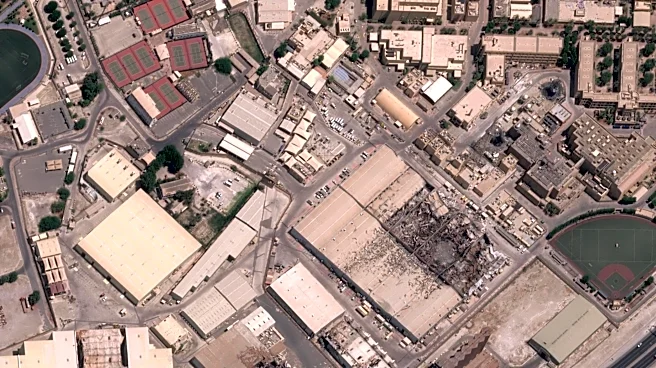
An investigation by AURORAH Geosignal Intelligence, a Geneva-based private firm, has revealed a pattern of Russian government and military satellites observing areas in Saudi Arabia both before and after missile and drone attacks by Yemen's Houthis. Between
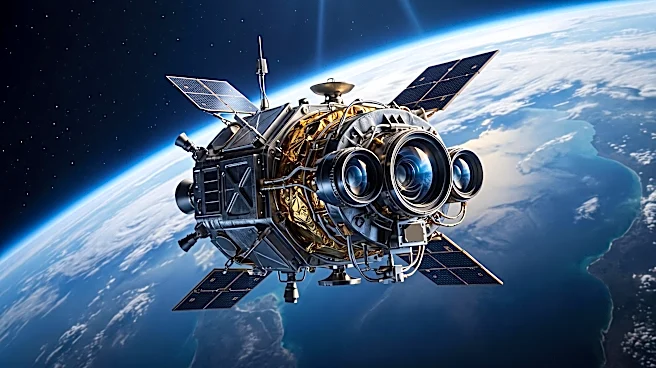
July 1 and October 19, AURORAH examined 40 such attacks and found consistent Russian satellite activity. Nawaf Obaid, founder of AURORAH, stated that by reconstructing Russia’s military reconnaissance architecture, his firm identified individual satellites, calculated their orbital trajectories, and correlated their activity with military developments across the region, including Saudi Arabia, Jordan, Bahrain, Kuwait, Qatar, the UAE, and Yemen. The identified satellites include Russia’s Bars-M military mapping satellites, Persona optical reconnaissance satellites, Lotos-S1 electronic intelligence satellites, Pion-NKS maritime reconnaissance systems, and Kondor-FKA radar-imaging satellites, as well as the EKS/Tundra infrared early-warning constellation. Obaid confirmed that 'Russian military geospatial and signals intelligence has supported the Iranian-led intelligence architecture assisting Houthi operations in Yemen.' This intelligence support is assessed to be relevant to Houthi missile and drone targeting against Saudi Arabia, with Russian military reconnaissance providing capabilities beyond ordinary commercial satellite imagery.
Why It's Important?
The findings by AURORAH Geosignal Intelligence are highly significant for U.S. foreign policy and regional security in the Middle East. The alleged involvement of Russian satellites in observing Houthi targets in Saudi Arabia suggests a deeper level of intelligence cooperation between Russia, Iran, and potentially the Houthis. This could significantly enhance the Houthis' targeting capabilities, making their attacks more precise and effective against critical Saudi infrastructure, including oil facilities and airports. For the U.S., this development raises concerns about Russia's expanding influence in the Middle East and its potential role in exacerbating regional conflicts. It also complicates efforts to de-escalate tensions and achieve a political resolution in Yemen, as external intelligence support can embolden non-state actors. The sophistication of the targeting, as seen in the September attacks on Saudi Arabia’s East-West Petroline, indicates a level of intelligence that goes beyond what the Houthis might independently possess, potentially impacting global energy markets and U.S. economic interests.
What's Next?
The revelation of Russian satellite observation of Houthi targets is likely to prompt increased scrutiny from the U.S. and its allies on Russia's activities in the Middle East. This could lead to diplomatic condemnations, calls for investigations, and potentially new sanctions against entities involved in intelligence sharing with the Houthis. Saudi Arabia and its partners will likely intensify their efforts to counter Houthi attacks, potentially seeking more advanced intelligence, surveillance, and reconnaissance (ISR) capabilities. The U.S. may also review its intelligence-sharing protocols and counter-intelligence measures in the region. The ongoing conflict in Yemen is expected to remain a flashpoint, with the Houthis potentially leveraging enhanced intelligence to continue their offensive operations. The international community will face renewed pressure to address the complex web of external support fueling the conflict and to push for a comprehensive political settlement.
Beyond the Headlines
Beyond the immediate military implications, the alleged use of Russian satellites to aid Houthi targeting in Saudi Arabia highlights the evolving landscape of geopolitical competition and proxy warfare. It underscores how space-based assets, traditionally the domain of major powers, are becoming increasingly integrated into regional conflicts, providing a critical advantage to actors who can access such intelligence. This development raises profound questions about the weaponization of space and the ethical boundaries of intelligence sharing in conflict zones. It also points to a potential shift in the balance of power, where non-state actors, with external state support, can challenge the security of established regional powers. The long-term implications could include a more militarized space environment, increased cyber warfare targeting satellite systems, and a further blurring of lines between state and non-state actors in international conflicts. This complex interplay of technology, geopolitics, and proxy warfare will continue to shape the future of security in the Middle East and beyond.