






What's Happening?
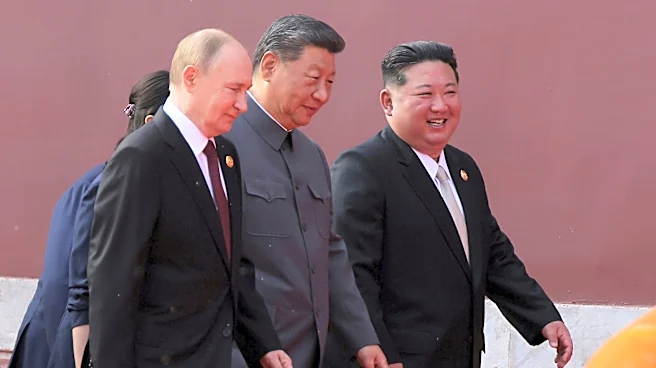
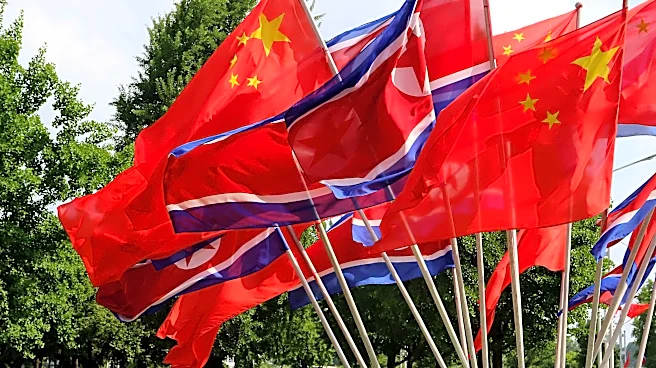
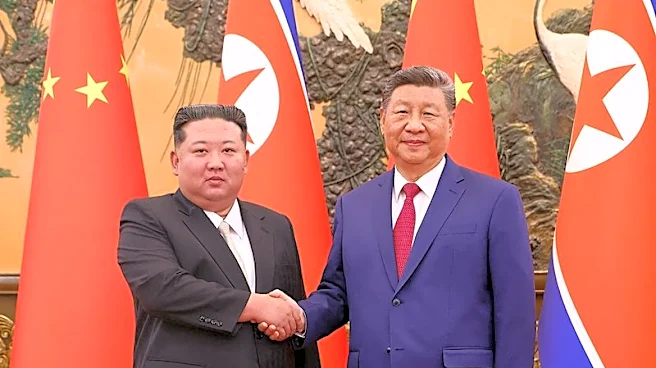
Chinese President Xi Jinping has embarked on a two-day state visit to North Korea, marking his first foreign trip of the year. During this visit, Xi pledged unwavering support for North Korean leader Kim Jong-un and emphasized the enduring friendship
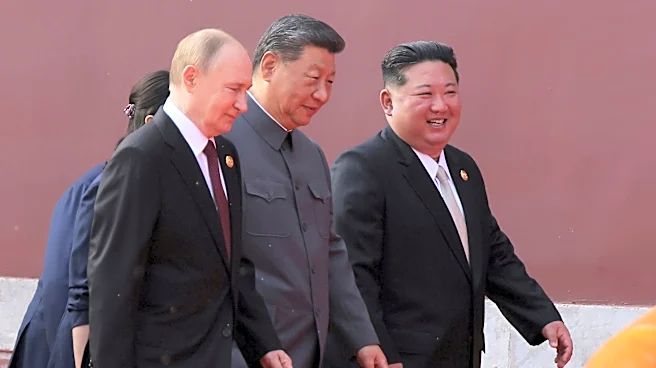
between China and North Korea. This visit comes shortly after Xi's meetings with U.S. President Trump and Russian President Vladimir Putin in Beijing. Xi's statements highlighted China's commitment to maintaining strong ties with North Korea, regardless of changes in the international landscape. He underscored the importance of the socialist cause led by Kim and called for enhanced cooperation in foreign policy, law enforcement, and military exchanges. This visit is seen as a strategic move by China to reinforce its influence in the region and to counterbalance North Korea's growing ties with Russia.
Why It's Important?
Xi Jinping's visit to North Korea is significant as it underscores China's strategic interests in maintaining a strong alliance with North Korea amidst shifting geopolitical dynamics. By reaffirming support for Kim Jong-un, China aims to ensure that North Korea remains within its sphere of influence, particularly as North Korea continues to develop its nuclear capabilities. This move is also a signal to the United States and other global powers of China's intent to play a leading role in Northeast Asia. The visit could impact U.S. foreign policy, as it highlights the complex alliances in the region and the challenges in addressing North Korea's nuclear ambitions. For North Korea, China's support provides a crucial diplomatic and economic lifeline, potentially affecting its negotiations with other countries.
What's Next?
Following Xi's visit, it is likely that China and North Korea will engage in deeper diplomatic and military cooperation. This could involve joint initiatives in areas such as economic development and security. The visit may also prompt reactions from the United States and its allies, who may seek to counterbalance China's influence in the region through diplomatic or economic measures. Additionally, North Korea's relationship with Russia could be affected, as China seeks to assert its dominance in the region. The international community will be closely monitoring any developments in North Korea's nuclear program and how China's support might influence its future actions.
Beyond the Headlines
Xi Jinping's visit to North Korea highlights the broader geopolitical competition in Northeast Asia, where China, the United States, and Russia vie for influence. This visit could have long-term implications for regional stability, particularly if it leads to increased military cooperation between China and North Korea. The reaffirmation of support for North Korea's socialist regime also reflects China's broader ideological stance against Western influence. This development may further complicate international efforts to denuclearize the Korean Peninsula, as North Korea may feel emboldened by China's backing. The visit also underscores the importance of diplomatic engagement in addressing complex international issues.