






What's Happening?
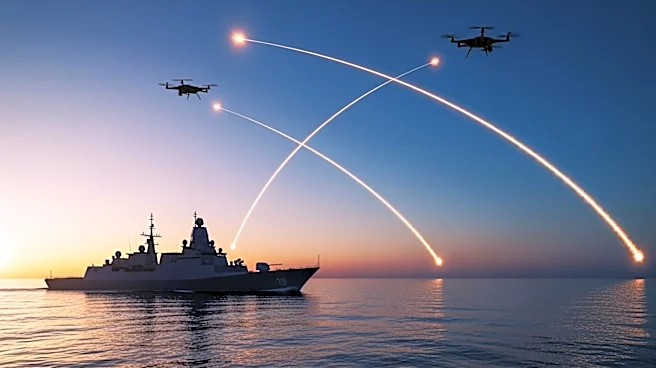
The U.S. military is adjusting to a prolonged conflict with Iran, characterized by intermittent exchanges of fire and a blockade of Iranian ports. This situation, initiated by President Trump's attack on Iran, has led to a stalemate despite a declared
ceasefire. U.S. troops in the Middle East are maintaining high readiness levels, while the Pentagon works to replenish depleted munitions. The conflict has resulted in injuries to approximately 400 U.S. troops, with many suffering from traumatic brain injuries. Thirteen service members have been killed. Families of service members are experiencing stress and uncertainty, exacerbated by Iranian media claims of attacks on U.S. forces, which the U.S. military denies.
Why It's Important?
The ongoing conflict with Iran has significant implications for U.S. military operations and the families of service members. The need to maintain a high state of readiness places a continuous strain on military resources and personnel. The financial burden of replenishing munitions and maintaining operational readiness is substantial, potentially impacting other defense priorities. The conflict also affects public opinion, with a Reuters/Ipsos poll indicating low support for the military action. The situation underscores the challenges of managing prolonged military engagements and their impact on service members' well-being and family life.
What's Next?
Negotiations between the U.S. and Iran are ongoing, with the potential to extend the ceasefire and address issues like the Strait of Hormuz and Iran's nuclear program. However, the stalemate suggests that the demands on U.S. military resources and personnel will continue. The Pentagon faces the challenge of balancing immediate operational needs with long-term strategic goals. The outcome of these negotiations could influence U.S. military strategy and foreign policy in the region.