





What's Happening?
Research from the University of Wyoming's Haub School of Environment and Natural Resources, led by associate professor and natural resource economist Jake Hochard, estimates the collective value of Wyoming's elk, mule deer, and pronghorn populations at nearly
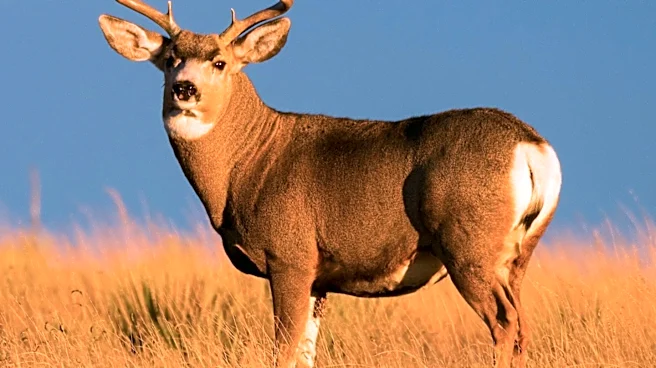
$6 billion. This valuation considers the 'natural wealth' these ungulates represent, generating returns in 'ecosystem services.' Unlike traditional economic impact studies that focus solely on revenue, Hochard's research accounts for both the value added to society and the costs associated with managing these wildlife populations, such as Game and Fish budgets and vehicle collisions. The study provides detailed valuations down to the herd level and tracks how these values change over time, even as populations fluctuate. For instance, while mule deer populations have significantly declined, their value has only seen a modest decrease.
Why It's Important?
This research offers a novel and comprehensive approach to valuing wildlife, moving beyond simple economic impact to include the full societal value and management costs. By quantifying the natural wealth of these ungulates, it provides a powerful tool for policymakers and conservationists to understand the economic significance of wildlife. This valuation can inform decisions regarding land use, conservation funding, and wildlife management strategies in Wyoming and potentially serve as a model for other states. Recognizing the multi-billion dollar value of these species can strengthen arguments for investing in migration corridors and habitat preservation, ensuring the long-term sustainability of these populations and the ecosystem services they provide. It also highlights the economic resilience of wildlife value, even in the face of population declines.
What's Next?
Jake Hochard plans to present his valuations of Wyoming's elk, mule deer, and pronghorn to a broad audience at the National Assembly of Sportsmen’s Caucuses conference in Oklahoma City in December. Following a successful peer-review process, a public portal of his valuation data is expected to be made available around the same time. This public release will allow stakeholders, including state agencies, conservation groups, and the public, to access and utilize this detailed economic data. The research could influence future legislative efforts related to wildlife conservation and funding in Wyoming, potentially leading to increased investment in wildlife management and habitat protection based on the quantified economic benefits.
Beyond the Headlines
This research challenges conventional thinking about natural resource valuation by integrating ecological and economic principles. It underscores the concept of 'natural capital' and its contribution to a state's overall wealth, similar to financial assets. By assigning a monetary value to wildlife, the study can bridge the gap between conservation efforts and economic development, demonstrating that environmental protection can also be a sound financial investment. This approach could foster a more holistic understanding of sustainability, encouraging decision-makers to consider the long-term economic benefits of maintaining healthy ecosystems. It also opens avenues for exploring innovative funding mechanisms for conservation, potentially attracting investments based on the quantifiable returns of natural capital.