
What's Happening?
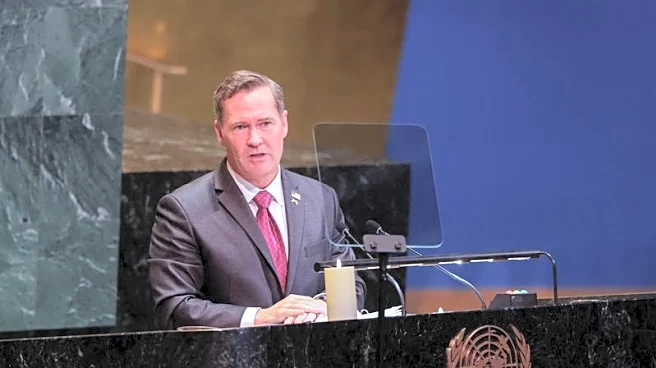
The United Nations Secretary-General, António Guterres, addressed the General Assembly, highlighting the unprecedented strain on the global system due to wars, division, climate breakdown, and the erosion
of respect for international law. Guterres emphasized the chaotic state of the world, marked by conflict, inequality, and unpredictability. He outlined three guiding priorities for the UN: upholding the UN Charter, fostering peace between nations and with nature, and promoting unity in an age of division. Guterres criticized the erosion of international law, citing attacks on civilians, unconstitutional government changes, and human rights violations. He also expressed concern over the concentration of wealth and power, with the richest one percent holding 43% of global financial assets. Additionally, Guterres warned about the challenges posed by emerging technologies and climate change, urging for faster emissions cuts and a transition away from fossil fuels.
Why It's Important?
The Secretary-General's address underscores the critical challenges facing the international community, highlighting the need for renewed multilateral cooperation. The erosion of international law and the concentration of wealth threaten global stability and equity, potentially exacerbating social and economic disparities. Guterres' call for reform in global institutions, including financial bodies and the Security Council, reflects the urgency to adapt to contemporary challenges. His emphasis on sustainable development and climate action aligns with global efforts to address environmental and socio-economic issues. The address serves as a reminder of the interconnectedness of global challenges and the necessity for collective action to achieve sustainable peace and development.
What's Next?
Guterres' address sets the stage for potential reforms in international governance structures, aiming to enhance their legitimacy and effectiveness. The focus on climate action and technology regulation may prompt increased international collaboration to address these pressing issues. As Guterres enters his final year in office, his commitment to advocating for these priorities could influence the UN's agenda and member states' policies. The call for a just transition away from fossil fuels and increased climate finance may lead to policy shifts and investments in renewable energy and sustainable practices. The emphasis on multilateralism and international cooperation could drive diplomatic efforts to resolve ongoing conflicts and promote global stability.
Beyond the Headlines
The Secretary-General's address highlights deeper implications for global governance and the role of international institutions in addressing contemporary challenges. The call for reform in global institutions reflects a recognition of the need for more inclusive and representative decision-making processes. The emphasis on technology regulation raises ethical considerations about the control and impact of emerging technologies on society. Guterres' focus on climate action underscores the long-term shifts required to mitigate climate change and its effects on global peace and security. The address also highlights the cultural and societal dimensions of inequality and exclusion, emphasizing the need for inclusive and united societies.