






What's Happening?
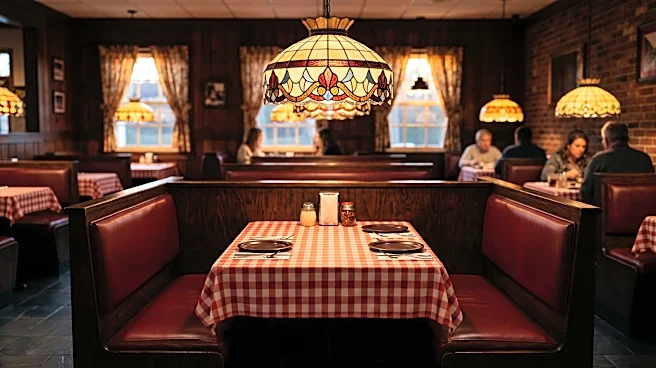
Conservative commentator Jack Posobiec has been actively promoting a concept he terms 'Pizza Hut nationalism,' advocating for a return to traditional values. This initiative has coincided with the significant success of retro Pizza Hut locations, which
have seen customers driving for hours to experience 1980s nostalgia. These redesigned restaurants feature elements like Tiffany-style lamps and red checkerboard tablecloths, reminiscent of Pizza Hut's past. Posobiec's calls for a return to tradition, first coined in 2022, appear to resonate with a segment of the public seeking nostalgic experiences. The success of these retro locations, such as one in Homosassa Springs, Florida, which more than doubled its dine-in sales after conversion, highlights a broader trend. Even younger demographics, including teens and those in their 20s, are engaging with this nostalgia on social media platforms like TikTok, suggesting a desire for simpler times.
Why It's Important?
The phenomenon of 'Pizza Hut nationalism' and the success of retro Pizza Hut locations underscore a significant cultural and economic trend in the U.S.: a yearning for nostalgia and traditional aesthetics. This movement, championed by figures like Jack Posobiec, indicates a consumer preference for experiences that evoke a sense of the past, potentially as a counter-response to rapid societal and technological changes. For the restaurant industry, this suggests that investing in nostalgic branding and atmosphere can be a powerful draw, attracting customers willing to travel considerable distances. Businesses that can tap into this sentiment of 'return to tradition' might find a receptive market, impacting marketing strategies and product development across various sectors. The engagement of younger generations with this retro trend also highlights that nostalgia is not solely a draw for older demographics but can appeal to a broader audience seeking authenticity or a perceived escape from modern complexities.
What's Next?
The continued success of retro-themed establishments, particularly those aligning with calls for a 'return to tradition,' could lead to a broader trend in the U.S. hospitality and retail sectors. Other companies might explore similar nostalgic revivals, investing in retro branding and experiences to attract consumers. This could manifest in various forms, from themed restaurants and stores to product lines that evoke past eras. The demand for specific retro elements, such as the Tiffany lights mentioned by Daland Corp's president Tim Sparks, could also spur new manufacturing or supply chains to meet this niche market. Furthermore, the influence of commentators like Jack Posobiec in shaping consumer preferences and cultural narratives around tradition and nostalgia may continue to grow, potentially impacting political discourse and consumer behavior in unexpected ways. Businesses will likely monitor these trends to adapt their strategies and capitalize on the evolving consumer landscape.
Beyond the Headlines
The 'Pizza Hut nationalism' movement, as articulated by Jack Posobiec, extends beyond mere culinary preference; it taps into deeper societal currents related to identity, tradition, and a perceived loss of cultural anchors. This phenomenon reflects a broader cultural yearning for stability and familiarity in an increasingly complex and rapidly changing world. The appeal of retro aesthetics and experiences can be seen as a form of cultural conservatism, where the past is idealized as a simpler, more authentic time. This trend has implications for how brands connect with consumers, suggesting that emotional resonance and a sense of shared heritage can be as powerful as innovation. Ethically, it raises questions about the commercialization of nostalgia and whether such movements inadvertently reinforce exclusionary or idealized versions of the past. Culturally, it highlights a potential shift in consumer values, where authenticity and tradition are increasingly prioritized, influencing everything from entertainment to lifestyle choices.