



What's Happening?
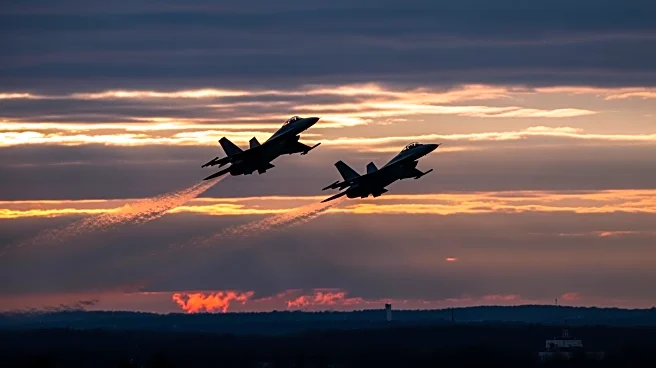
Poland, a NATO member, has scrambled fighter jets following large-scale Russian strikes on Ukraine. The Polish Armed Forces initiated military aviation operations in response to Russian long-range aviation activities targeting Ukraine. The strikes involved
653 Shahed-type attack drones, 36 cruise missiles, and 17 ballistic missiles, hitting 29 locations across Ukraine. The attacks severely damaged Ukraine's energy infrastructure, including substations and power generation facilities, and severed a power line to the Zaporizhzhia nuclear power plant. Poland's actions are described as preventive, aimed at securing and protecting its airspace, especially in regions adjacent to the conflict. The Polish military remains on high alert, ready to respond to any further developments.
Why It's Important?
This development underscores the ongoing regional instability and the potential risk of the conflict spilling over into NATO territories. Poland's response highlights the heightened security concerns among NATO members bordering Ukraine. The situation poses a significant challenge for NATO, as it must balance supporting Ukraine while preventing escalation into a broader conflict involving its members. The attacks on Ukraine's energy infrastructure also have severe humanitarian implications, potentially leading to power shortages and affecting civilian life. The international community remains watchful, as any misstep could lead to a larger confrontation involving NATO and Russia.
What's Next?
The situation remains volatile, with Russia expected to continue its pattern of missile and drone attacks. NATO countries, particularly those bordering Ukraine, will likely maintain heightened military readiness. Diplomatic efforts to resolve the conflict are ongoing, but the security situation along the NATO-Ukraine border remains tense. The international community will continue to monitor the situation closely, with potential implications for NATO's strategic posture and its relations with Russia.