






What's Happening?
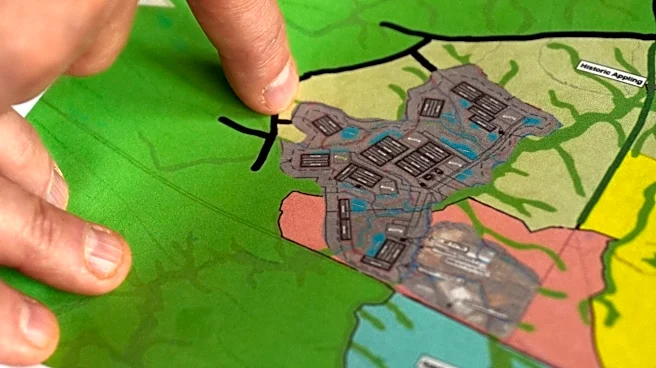
Michael Carter Jr., a fifth-generation farmer in Orange County, Virginia, is actively opposing the proposed Valley Link transmission line, which threatens to cut through his family's 116-year-old farmland. The 115-mile, 765-kilovolt line, a joint venture
by Dominion and two other companies, is designed to carry 6.6 gigawatts of power from Joshua Falls in Campbell County to a new substation in Culpeper, primarily to meet the high electricity demand from data centers in Northern Virginia. Carter's family acquired the land in 1910, and he has used it to grow organic African crops and consult on farming techniques. He had plans to expand his farm into a nature-based health resort and rural retreat, but the transmission line's potential routes, all converging near his property, have cast uncertainty over his vision. Carter expresses deep concern about the infringement on his family's heritage, the potential damage to the environment, and the health risks associated with electromagnetic fields (EMF) from the lines, despite developers' assurances of studying and mitigating EMF impacts.
Why It's Important?
This situation highlights a significant conflict between energy infrastructure development and the preservation of generational land and agricultural heritage in the U.S. The Valley Link project, identified as crucial for grid reliability by PJM, the regional grid operator, underscores the growing energy demands, particularly from the burgeoning data center industry in Northern Virginia. However, it also brings to the forefront the profound impact such large-scale projects have on individual landowners and communities. For Michael Carter Jr., the land represents not just property, but a priceless legacy of births, deaths, joys, and pains spanning over a century. The potential loss or disruption of this land affects his family's identity, economic future, and the continuation of sustainable farming practices. This conflict reflects a broader national challenge of balancing economic growth and technological advancement with environmental stewardship, cultural preservation, and the rights of private property owners.
What's Next?
The developers of the Valley Link transmission line are currently determining their preferred route and backup options, which will then be submitted to the State Corporation Commission for consideration. Grassroots efforts opposing the project are mobilizing across the nine impacted counties, indicating continued public engagement and potential legal challenges. Michael Carter Jr. has stated his willingness to fight to protect his family's land, suggesting that the process will likely involve further public hearings, environmental impact assessments, and potentially protracted legal battles. The State Corporation Commission's decision will be critical, as it will weigh the project's necessity for regional energy reliability against the concerns of affected landowners and environmental impacts. The outcome could set precedents for future energy infrastructure projects and the extent to which private land and community heritage are protected in the face of growing energy demands.
Beyond the Headlines
The struggle over the Valley Link transmission line delves into the less obvious implications of rapid technological expansion, specifically the energy footprint of data centers. While data centers are vital for the digital economy, their immense power consumption creates a demand that often necessitates large-scale infrastructure projects like the Valley Link. This raises ethical questions about the true cost of digital convenience and the equitable distribution of its burdens. The concerns about EMF exposure, though scientifically debated, highlight a broader public anxiety regarding the health impacts of modern infrastructure. Furthermore, Carter's fight for his generational farm underscores the cultural and historical significance of land beyond its economic value, particularly for communities with deep roots and a history of struggle for land ownership. This conflict forces a re-evaluation of societal priorities: whether the pursuit of technological advancement should supersede the preservation of heritage, environmental health, and the well-being of local communities.