

What's Happening?
German Chancellor Friedrich Merz visited Beijing to discuss strengthening economic ties with China, Germany's largest trading partner. During his visit, Merz emphasized the importance of a 'comprehensive strategic partnership' with China, despite a significant
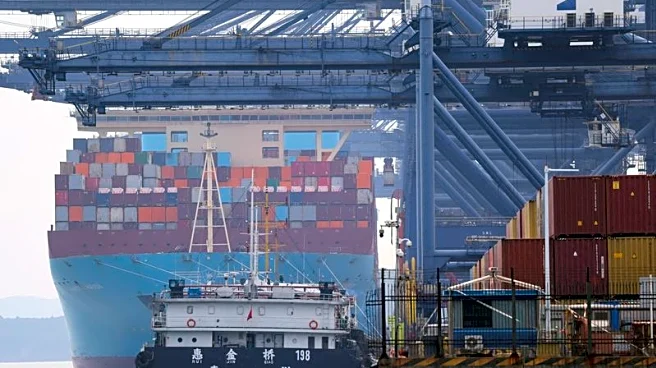
trade deficit. The visit aimed to reset relations that have been strained by economic imbalances and supply chain issues. Merz, accompanied by a large business delegation, met with Chinese President Xi Jinping and Premier Li Qiang. The discussions focused on enhancing strategic communication and mutual trust between the two nations. Merz highlighted the need to address risks associated with supply chain dependencies, particularly after China tightened export controls on essential materials last year. The visit resulted in agreements on climate change, green transition, and cooperation in various industries, although the number of agreements was fewer compared to recent visits by other European leaders.
Why It's Important?
The visit underscores the critical role China plays in Germany's economy, especially as Germany emerges from a recession. Strengthening ties with China is vital for Germany's industrial sector, which relies heavily on Chinese markets and manufacturing capabilities. However, the growing trade deficit, which has quadrupled since 2020, poses a challenge. Addressing this imbalance is crucial for Germany to maintain its economic stability and competitiveness. The visit also reflects broader European efforts to recalibrate relationships with China amid geopolitical tensions with the U.S. The outcome of these discussions could influence future trade policies and economic strategies in Europe, impacting industries reliant on Chinese imports and exports.
What's Next?
Chancellor Merz is scheduled to visit Washington next week, where discussions may include Germany's economic strategies and its relationship with China. The outcomes of these meetings could shape future trade policies and influence Germany's approach to balancing its economic interests with geopolitical considerations. Additionally, the agreements signed during the visit may lead to increased cooperation in sectors like artificial intelligence and biomedicine, potentially opening new avenues for German businesses in China. The ongoing dialogue between Germany and China will likely continue to address trade imbalances and supply chain dependencies.
Beyond the Headlines
The visit highlights the complex dynamics of global trade, where economic interests often intersect with geopolitical strategies. Germany's efforts to strengthen ties with China while managing trade imbalances reflect a broader trend among European nations to diversify economic partnerships amid uncertainties in U.S.-China relations. The focus on 'derisking' strategies indicates a shift towards reducing dependency on single markets, which could lead to more resilient supply chains. This development may also prompt other countries to reassess their trade relationships and explore new markets to mitigate similar risks.