



What's Happening?
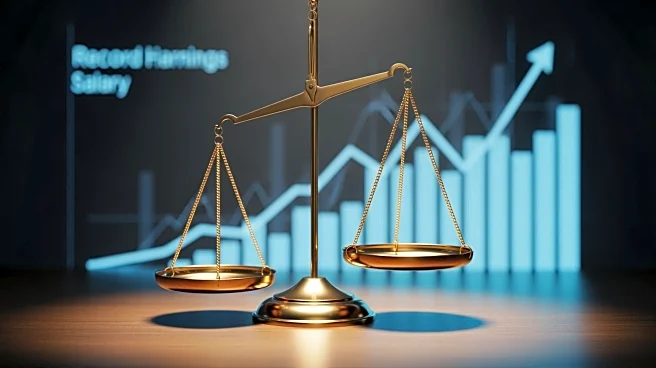
The International Labour Organization (ILO) has reported a significant increase in average monthly wages, reaching a record high of 15,098 shekels in 2025. Despite this increase, the gender wage gap has widened, with men earning an average of 18,441 shekels compared
to 11,940 shekels for women. This represents a 2% increase in the gender gap from the previous year. The report also highlights that women are disproportionately represented in the lower income brackets, while men dominate the higher income brackets. The wage gap is most pronounced in the top decile, where men's wages exceed women's by 166%. The ILO emphasizes the need for job creation in developing countries to support economic development and reduce poverty, as 1.2 billion young people are expected to enter the workforce over the next decade.
Why It's Important?
The widening gender wage gap, despite overall wage increases, underscores persistent inequality in the labor market. This disparity affects economic stability and growth, as it limits the financial independence and economic contributions of women. Addressing this gap is crucial for achieving gender equality and ensuring that economic development benefits all segments of society. The ILO's emphasis on job creation highlights the need for policies that promote inclusive growth and provide equal opportunities for all workers, regardless of gender. The entry of a large number of young people into the workforce presents both a challenge and an opportunity for global economic development.