
What's Happening?
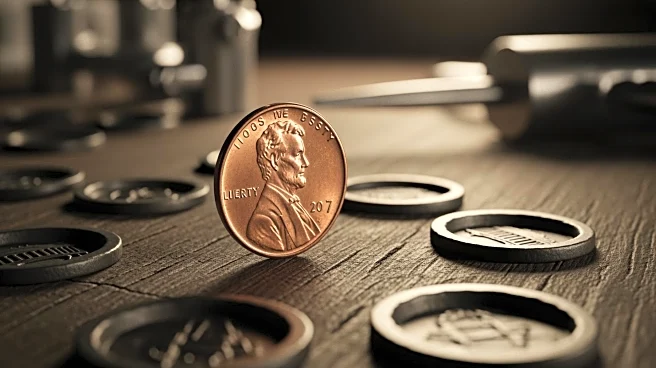
The U.S. Mint has officially ended the production of circulating pennies, marking a significant shift in its coin production strategy. This decision was formalized with a ceremonial striking event on November
12, 2025, where it was announced that pennies will now only be produced for collector sets. The move follows a directive from President Trump aimed at reducing government spending. As a result, the Mint's overall coin production has decreased, with November 2025 seeing a total of 130.28 million coins produced, a significant drop from previous months. This reduction in output is the lowest since 2009, with the annual mintage expected to reach approximately 5.1 billion coins by the end of the year, down from 5.6 billion in 2024.
Why It's Important?
The cessation of penny production is a notable development in U.S. monetary policy, reflecting a shift towards cost-saving measures in government operations. The penny, which has historically accounted for a large portion of the Mint's output despite its high production cost, will no longer be a staple in everyday transactions. This change could impact various sectors, including retail and banking, which rely on coin circulation. Additionally, the reduction in overall coin production may affect the availability of other denominations, potentially influencing cash transactions and the operations of businesses that handle large volumes of coins.
What's Next?
With the end of penny production, the U.S. Mint will focus on meeting the demand for other coin denominations. The Mint's future production strategies may involve further adjustments to align with evolving economic needs and technological advancements in payment systems. Stakeholders, including financial institutions and businesses, will need to adapt to these changes, potentially increasing reliance on digital transactions. The Mint's decision may also prompt discussions on the future of other low-denomination coins and their role in the economy.