

What's Happening?
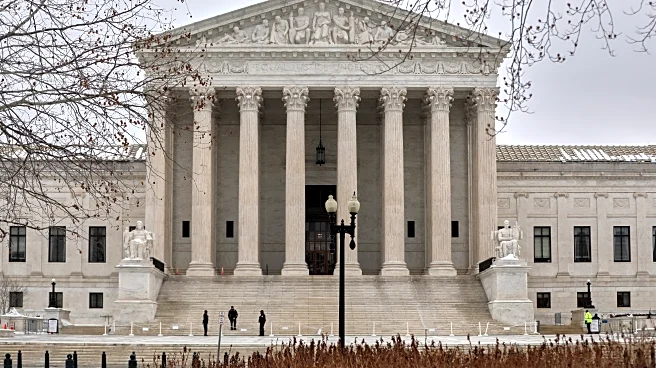
The U.S. Supreme Court has ruled 6-3 against tariffs imposed by President Trump under emergency legislation, declaring them illegal. This decision affects consumers who have paid higher prices due to these tariffs. Despite the ruling, experts suggest
that consumers face significant challenges in reclaiming the money spent on these tariffs. Large companies like Costco have already initiated lawsuits to recover tariff payments, but the process for individual consumers remains unclear and potentially costly. The ruling has sparked discussions on the feasibility of setting up a system for consumers to file claims.
Why It's Important?
The Supreme Court's decision has significant implications for U.S. consumers and businesses. While large corporations may have the resources to pursue legal action to recover tariff payments, individual consumers are less likely to see refunds. This situation underscores the complexities of tariff policies and their impact on everyday Americans. The ruling also highlights the broader economic implications of trade policies and the challenges in reversing their effects. Businesses may continue to maintain high prices, affecting consumer spending and economic dynamics.
What's Next?
Following the ruling, there may be an increase in class action lawsuits as businesses and consumers seek to recover tariff payments. The government may face pressure to establish a streamlined process for claims, but the logistics and costs involved could be prohibitive. The decision may also influence future trade policy discussions and the use of emergency powers in economic matters. Stakeholders, including policymakers and consumer advocacy groups, will likely engage in debates on how to address the financial impact on consumers.