



What's Happening?
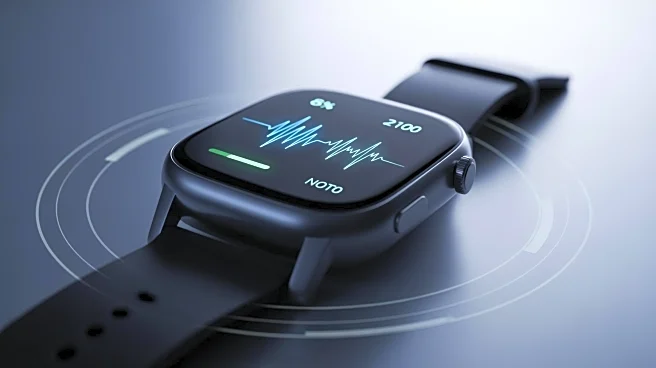
The increasing use of smartwatches, such as the Apple Watch and Samsung Galaxy Watch, has sparked discussions about their impact on users' mental health. A study highlighted that 20% of individuals using wearable tech for heart health monitoring experienced
heightened anxiety, leading to increased healthcare resource utilization. These devices, capable of performing electrocardiograms (ECGs) and monitoring various health metrics, can alert users to potential health risks like atrial fibrillation. However, the constant monitoring and data interpretation can cause stress, as users may not fully understand the implications of the data. Experts like Professor Niels Peek and Clinical Psychologist Lindsey Rosman express concerns that while these devices can detect diseases early, they may also contribute to a phenomenon known as the 'worried well,' where users become overly concerned about their health based on smartwatch data.
Why It's Important?
The proliferation of wearable health technology has significant implications for public health and the healthcare industry. While these devices offer the potential to improve health outcomes by providing early warnings of medical conditions, they also pose challenges. The anxiety induced by constant health monitoring can lead to unnecessary medical consultations, increasing the burden on healthcare systems. This trend highlights the need for better user education on interpreting health data and the development of guidelines to prevent health anxiety. The balance between beneficial health monitoring and the risk of inducing stress is crucial for the future of wearable health technology.