
What's Happening?
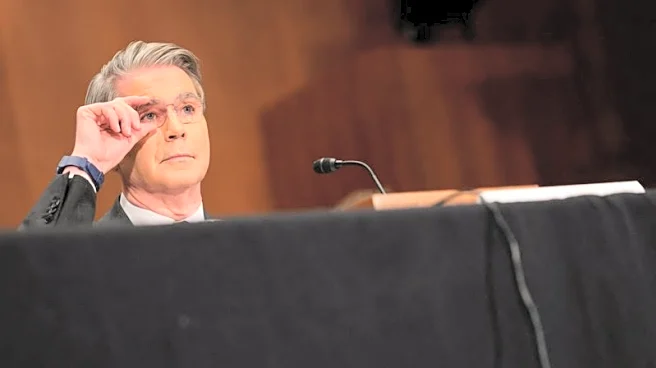
Federal Reserve Chair Jerome Powell is under scrutiny following a criminal investigation launched by the Department of Justice, reportedly at the behest of President Trump. The investigation concerns Powell's
testimony related to renovations of Federal Reserve buildings, which Powell claims is a pretext for the administration's dissatisfaction with the Fed's interest rate policies. President Trump has been vocal about his desire for lower interest rates, which he believes would benefit the U.S. economy and reduce government financing costs. The situation has raised concerns about the independence of the Federal Reserve, with Powell and other central bank officials defending the institution's autonomy in setting monetary policy. The investigation and Trump's criticism have sparked a debate about the future leadership of the Fed, as Powell's term is set to end soon, and Trump is expected to nominate a new chair.
Why It's Important?
The independence of the Federal Reserve is crucial for maintaining stable economic policies free from political influence. President Trump's actions and the DOJ investigation into Powell could undermine this independence, potentially leading to policies that prioritize short-term political gains over long-term economic stability. If the Fed's autonomy is compromised, it could result in inflationary pressures and a loss of confidence in U.S. monetary policy. The situation also highlights the broader tension between the executive branch and independent agencies, raising questions about the balance of power and the role of political influence in economic decision-making. The outcome of this conflict could have significant implications for the U.S. economy, affecting everything from interest rates to investor confidence.
What's Next?
As Powell's term nears its end, the nomination of a new Fed chair by President Trump will be closely watched. The new chair's stance on interest rates and their ability to maintain the Fed's independence will be critical. Additionally, the Supreme Court is set to hear a case involving Fed Governor Lisa Cook, which could further impact the Fed's independence depending on the outcome. The financial markets and political observers will be monitoring these developments, as they could influence future monetary policy and the broader economic landscape. The response from Congress and other political leaders will also be pivotal in determining the Fed's future direction.
Beyond the Headlines
The ongoing situation with the Federal Reserve underscores the delicate balance between political oversight and institutional independence. It raises ethical questions about the extent to which political leaders should influence independent agencies. The case also highlights the potential for legal and political challenges to be used as tools for exerting pressure on independent bodies. In the long term, this could lead to a reevaluation of the legal frameworks that protect the independence of such institutions, potentially prompting legislative changes to safeguard their autonomy.