



What's Happening?
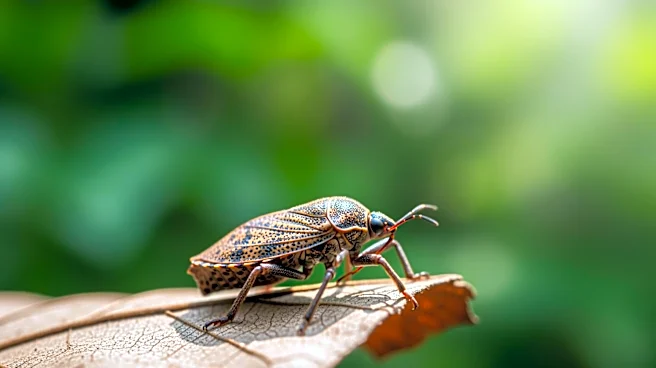
Researchers at the University of Florida are raising awareness about the presence of kissing bugs in Florida, which can transmit a parasite causing Chagas disease. This disease, now considered endemic in the U.S., can lead to severe heart and organ damage
if untreated. The bugs are prevalent in the southern U.S., and Florida ranks third in disease burden. The university is urging residents to report sightings of these insects to better assess the threat. The disease often goes undiagnosed due to its asymptomatic nature in early stages, but can have serious long-term health impacts.
Why It's Important?
The presence of kissing bugs and the potential spread of Chagas disease pose a significant public health concern in Florida and other southern states. The disease can remain undetected for years, leading to severe health complications. Increased awareness and research can help in early detection and treatment, potentially reducing the disease's impact. The University of Florida's efforts to study and track these insects are crucial for developing strategies to mitigate the spread and protect public health.
What's Next?
The University of Florida is expanding its research efforts by assembling a multidisciplinary team to study the kissing bugs and their associated parasite. This research aims to provide more information to healthcare providers for better diagnosis and treatment of Chagas disease. Public health initiatives may also be developed to educate residents about the risks and prevention methods. Continued monitoring and research are essential to address this emerging health threat effectively.