








What's Happening?
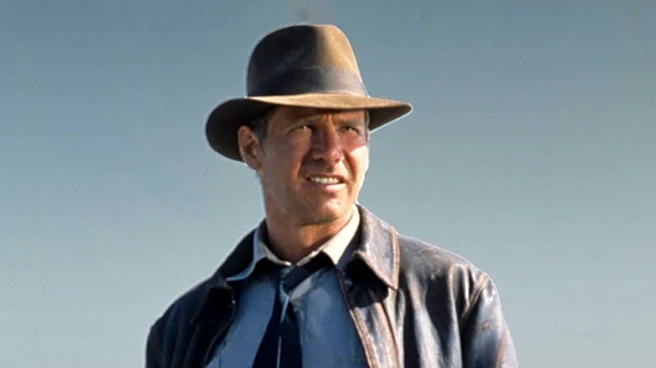
Actor Harrison Ford, known for his iconic roles, was a distinguished scout in his youth, achieving the rank of Life Scout, the second-highest in the Boy Scouts organization. He also served as a summer camp counselor. This background in scouting was notably
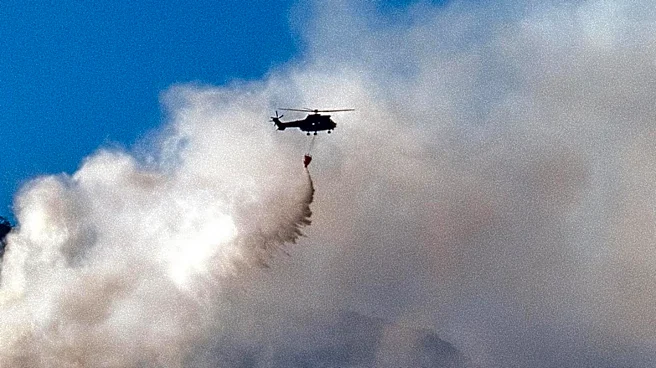
demonstrated in July 2001 when Ford, then a part-time Wyoming resident, assisted in the rescue of a lost 13-year-old Boy Scout, Cody Clawson, in a forest south of Yellowstone National Park. Ford piloted his helicopter and was the first to locate the teen, who signaled him using the reflection from his belt buckle. This real-life act of heroism resonated with the public, further solidifying his image as a hero beyond his on-screen characters.
Why It's Important?
Harrison Ford's involvement in scouting and his subsequent real-life rescue mission underscore the enduring values and practical skills fostered by organizations like the Boy Scouts of America. His story serves as an inspirational example of how early life experiences can shape character and contribute to civic responsibility. For youth development programs, this highlights the tangible benefits of teaching survival skills, leadership, and community service. The incident also illustrates the impact of individual actions in emergency situations, demonstrating how personal initiative and specialized skills, even those developed through hobbies like piloting, can have significant real-world consequences. It reinforces the idea that public figures can leverage their resources and skills for the greater good, inspiring others to contribute to their communities.
Beyond the Headlines
This narrative extends beyond a simple celebrity anecdote, touching upon the broader societal value of preparedness and community engagement. Ford's actions exemplify the 'Be Prepared' motto of scouting, showcasing how skills learned in youth can be applied in critical adult situations. It also subtly highlights the role of private citizens, particularly those with unique resources like a helicopter, in supporting public safety efforts. The public's positive reaction to Ford's heroism reflects a collective appreciation for genuine acts of service, contrasting with the often-superficial nature of celebrity culture. This event reinforces the idea that true heroism often lies in practical, selfless acts that directly benefit others, rather than solely in fictional portrayals.