







What's Happening?
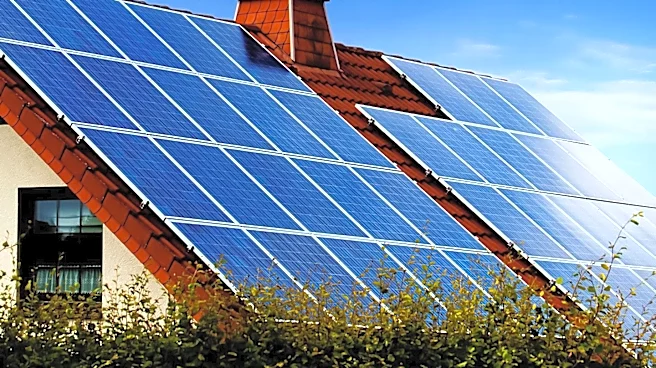
A rooftop solar owner encountered a significant discrepancy between their Tesla app's energy readings and their utility company's bill. On a sunny day, the Tesla and Netzero apps indicated a credit of -29 kWh, suggesting excess energy production. However,
the utility company recorded 37 kWh of usage, stating that billing would be based on its meter. This conflict creates confusion for homeowners relying on solar panels and battery storage to reduce electricity costs. Commenters on a Reddit post largely agreed that utility companies typically base bills on their own equipment, making disputes challenging. Potential reasons for the discrepancy include different accounting methods (gross vs. net), the absence of a proper bidirectional meter, or certain circuits not being tracked by the Tesla gateway, such as large appliances like air conditioning.
Why It's Important?
This issue highlights a critical challenge in the adoption of residential solar and battery storage systems: the potential for conflicting data between homeowner monitoring tools and utility billing systems. Such discrepancies can erode consumer trust, complicate financial planning for solar owners, and potentially deter future installations. For households investing in solar to achieve energy independence and cost savings, accurate and transparent billing is paramount. When a homeowner's app shows a credit while the utility bills for usage, it undermines the perceived value of their solar investment. This situation also points to the need for standardized and clear communication protocols between distributed energy resources and grid operators to ensure consistent and fair billing practices.
What's Next?
Homeowners experiencing similar discrepancies are advised to take several steps. A good first action is to compare the app's 'used' and 'export' readings with the utility's hourly or daily data. If the gap persists, requesting a meter inspection from the utility company is recommended. Additionally, homeowners should verify whether their monitoring setup covers the entire house or only specific circuits. The article suggests that battery storage can help mitigate some of these issues by providing greater energy independence. EnergySage offers resources to help homeowners understand solar costs and incentives, and to compare installation estimates. Ultimately, clearer communication and potentially updated metering infrastructure from utilities will be crucial to resolve these billing conflicts and support the continued growth of residential solar.
Beyond the Headlines
The conflict between a homeowner's solar app and their utility bill touches upon broader themes of data ownership, transparency, and the evolving role of utilities in a decentralized energy landscape. As more homes adopt smart energy technologies, the need for seamless integration and consistent data reporting becomes critical. This situation underscores the power imbalance between individual consumers and large utility companies, where the utility's meter often holds ultimate authority. It also raises questions about the adequacy of current metering infrastructure to accurately capture the complexities of bidirectional energy flow in homes with solar and storage. Addressing these issues will require not only technological advancements but also regulatory reforms and consumer advocacy to ensure fair practices and foster confidence in renewable energy investments.