








What's Happening?
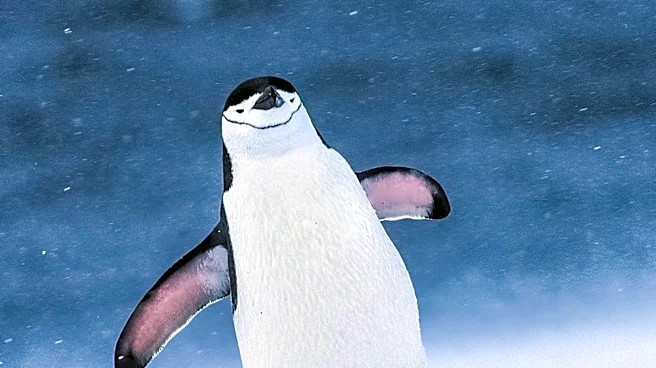
Researchers have developed a bio-inspired nanocoating that improves the performance of LiDAR systems in foggy and rainy conditions. The coating, inspired by the water-repellent properties of penguin feathers, uses plasmonic nanocomposite helices to maintain
high optical transparency and repel water. This innovation addresses the scattering issues that typically hinder LiDAR systems in adverse weather. The nanocoating combines photothermal heating and water repellence, using copper nanoparticles embedded in silica nanohelices to absorb sunlight and generate heat, thus preventing condensation and maintaining clear visibility.
Why It's Important?
This development is crucial for enhancing the reliability of LiDAR systems, which are integral to autonomous vehicles, robotics, and outdoor sensing technologies. By ensuring clear visibility in challenging weather conditions, the nanocoating could significantly improve the safety and efficiency of autonomous systems. This innovation also represents a step forward in the application of bio-inspired designs in technology, potentially leading to more durable and efficient optical systems. The ability to maintain high transparency while repelling water could have wide-ranging applications beyond LiDAR, including in surveillance cameras and environmental sensors.
What's Next?
Future research may focus on scaling up the production of these nanocoatings and exploring their application in other optical devices. The integration of this technology into commercial LiDAR systems could enhance their marketability and adoption in various industries. Researchers might also investigate the potential for these coatings to be used in other weather-sensitive technologies, such as drones and smart windows. Continued development could lead to more robust and versatile optical systems capable of operating in diverse environmental conditions.