



What's Happening?
A UPS driver in New York City was caught in a viral TikTok video expressing frustration over receiving a parking ticket while making deliveries in a busy commercial district. The video highlights the ongoing challenges delivery drivers face in urban areas
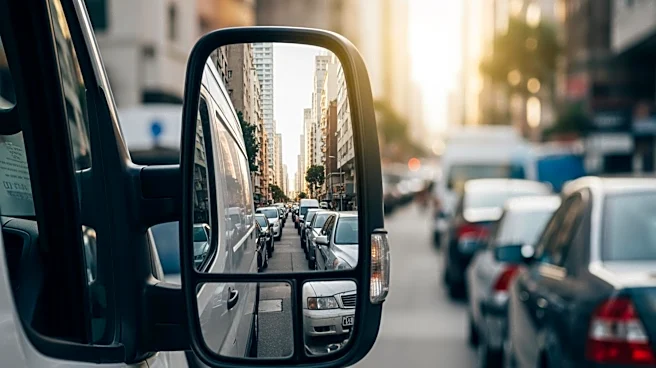
like New York, where designated commercial loading zones are insufficient to meet the demands of the booming e-commerce industry. The driver, unable to find legal parking, questioned a parking attendant about where to park, only to be advised to call the city's 311 line for parking information. This incident underscores the broader issue of limited curb space in cities, which forces delivery drivers to frequently double park or stop in restricted areas, leading to millions of dollars in parking fines for companies like UPS, Amazon, and FedEx.
Why It's Important?
The situation faced by the UPS driver is emblematic of a larger logistical challenge in urban centers, where the rapid growth of e-commerce has outpaced infrastructure development. This has significant implications for delivery companies, which incur substantial costs from parking fines, potentially affecting their operational efficiency and profitability. The lack of adequate parking solutions not only impacts the companies but also contributes to traffic congestion and environmental concerns in densely populated areas. As cities continue to grow and e-commerce expands, finding sustainable solutions to these logistical challenges will be crucial for maintaining efficient urban delivery systems and minimizing economic and environmental impacts.
What's Next?
Cities like New York may need to explore innovative solutions to address the parking challenges faced by delivery drivers. This could include expanding designated loading zones, implementing dynamic pricing for curb space, or investing in technology to optimize delivery routes and parking availability. Stakeholders, including city planners, delivery companies, and policymakers, will need to collaborate to develop strategies that balance the needs of commerce with urban livability. Additionally, companies may need to consider alternative delivery methods, such as micro-distribution centers or partnerships with local businesses, to reduce reliance on street parking.