







What's Happening?
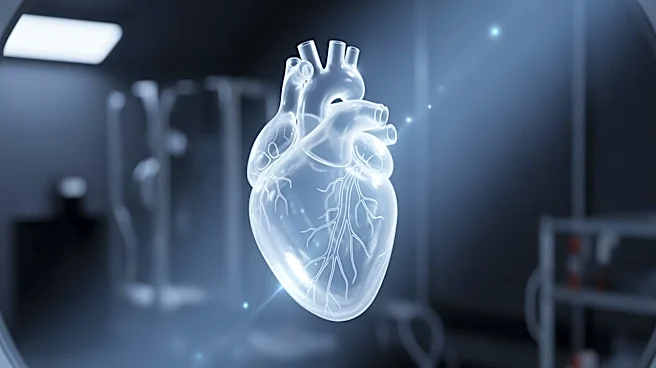
Researchers at Cedars-Sinai in the United States have discovered that microgravity conditions aboard the International Space Station (ISS) facilitate the growth of human cardiac organoids, small three-dimensional structures that mimic early heart tissue.
These organoids were produced more efficiently in space than in Earth-based laboratories. The study, led by Arun Sharma, was presented at the International Society for Heart and Lung Transplantation's annual meeting. The research highlights a contrast between the effects of microgravity on adult human hearts, which can lose muscle conditioning, and on developing cardiac cells, which seem to thrive in such conditions. This discovery could have implications for regenerative medicine, although the mini-hearts are not yet ready for clinical use.
Why It's Important?
The findings from Cedars-Sinai could significantly impact regenerative medicine and the study of cardiovascular diseases, which are leading causes of death globally. By understanding how microgravity affects the growth of cardiac tissues, researchers can explore new methods for producing heart tissues that may be used in drug testing and disease research. This could lead to more accurate models for studying heart diseases and testing treatments, potentially reducing the gap between laboratory results and patient outcomes. The research also opens up possibilities for producing thicker and more resilient cardiac patches for patients with heart muscle injuries, although this application is still in the experimental phase.
What's Next?
The Cedars-Sinai team plans to continue their research by sending additional heart cell experiments to the ISS on a NASA resupply mission scheduled for August. These experiments aim to deepen the understanding of human cell development in microgravity and explore the potential for manufacturing biological tissues in space. However, challenges such as the high cost of space transport and the need for regulatory approval remain. The research is still in its early stages, and any medical applications will require extensive validation and safety testing before they can be considered for clinical use.