





What's Happening?
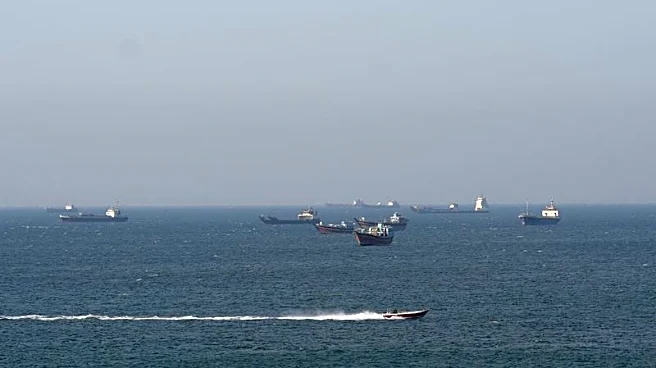
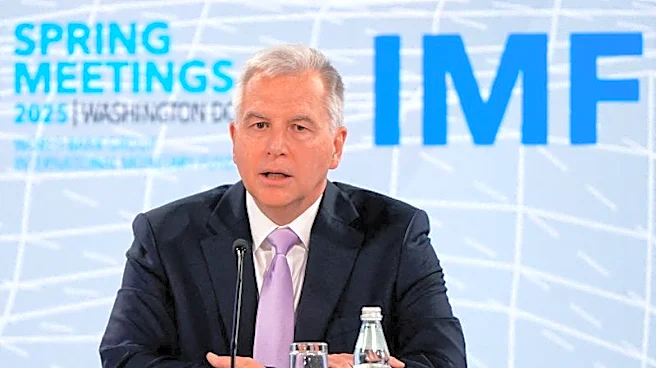
Qatar's Finance Minister, Ali bin Ahmed Al Kuwari, has issued a warning about a potential global economic shock due to the ongoing conflict in the Strait of Hormuz. Speaking at the International Monetary Fund Spring Meetings in Washington, Al Kuwari highlighted
that the current energy crisis is just the beginning, with the full impact expected in the coming months if the strait remains closed. The Strait of Hormuz is a critical passage for global energy supplies, and its disruption has already led to increased energy prices. The conflict has also affected the global fertilizer trade, raising concerns about food shortages. Qatar, a major helium supplier, warns of potential shortages impacting healthcare and semiconductor industries. The situation has already affected Qatar's Ras Laffan liquefied natural gas facility, reducing the country's export capacity by 17%.
Why It's Important?
The closure of the Strait of Hormuz poses a significant threat to global energy supplies, as it is a vital route for oil and gas transportation. The disruption could lead to energy shortages, affecting countries worldwide, even those willing to pay higher prices. The potential shortages in fertilizers could disrupt agricultural cycles, leading to food crises. Additionally, the impact on helium supplies could affect critical sectors like healthcare and technology. The ongoing conflict and its economic repercussions could push the global economy towards a recession, exacerbating inflation and tightening financial conditions. Qatar's situation underscores the vulnerability of global supply chains to geopolitical tensions.
What's Next?
If the conflict in the Strait of Hormuz continues, the global economic impact is expected to worsen. Qatar is preparing to mitigate the effects domestically with financial buffers and targeted support for affected sectors such as aviation and manufacturing. However, the international community may need to seek diplomatic solutions to stabilize the region and ensure the safe passage of goods. The prolonged disruption could lead to increased international efforts to find alternative energy routes and sources to reduce dependency on the strait.