



What's Happening?
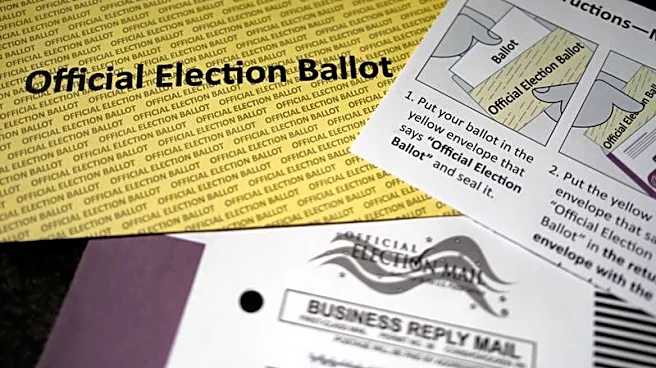
A federal judge has overturned New Hampshire's proof-of-citizenship voter registration law, citing concerns that it could disenfranchise qualified voters. The decision was announced on Friday morning, and it mandates that the state revert to its 2024
election laws, allowing voters to use affidavits to prove their qualifications at polling places. Secretary of State David Scanlan expressed disagreement with the ruling but acknowledged the need to comply with the court's decision for the time being. The American Civil Liberties Union attorney Henry Klementowicz welcomed the ruling, emphasizing the importance of accessible voter registration. The New Hampshire Attorney General's Office plans to appeal the decision, arguing that the law was designed to protect election integrity.
Why It's Important?
The ruling has significant implications for voter access and election integrity in New Hampshire. By overturning the proof-of-citizenship requirement, the court aims to ensure that eligible voters are not hindered by additional registration barriers. This decision could influence similar laws in other states and potentially reach the U.S. Supreme Court, affecting national voter registration policies. The appeal by the Attorney General's Office highlights ongoing debates about balancing election security with voter accessibility. Stakeholders such as civil rights organizations and political leaders will closely monitor the appeal process, as it could set precedents for future election laws.
What's Next?
The New Hampshire Attorney General's Office intends to appeal the federal judge's decision, which could lead to further legal proceedings. If the case progresses, it may eventually be considered by the U.S. Supreme Court, potentially impacting voter registration laws nationwide. Political leaders and advocacy groups are likely to engage in discussions and campaigns to influence public opinion and policy decisions related to voter registration requirements. The outcome of the appeal could shape future legislative efforts to balance election integrity with voter accessibility.