






What's Happening?
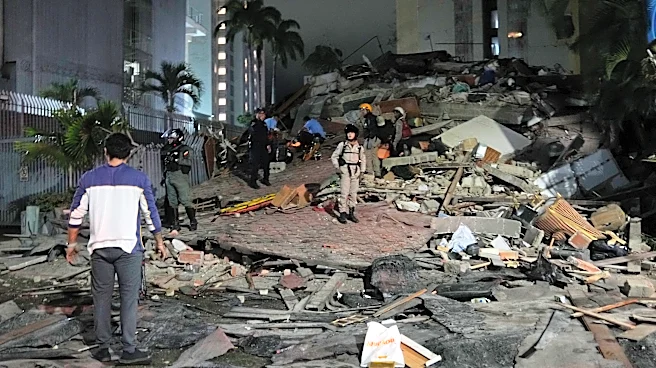
Jewish and Israeli aid organizations are preparing to send teams to Venezuela following devastating earthquakes that struck the country. The earthquakes, with magnitudes of 7.2 and 7.5, hit the town of Morón, about 100 miles west of Caracas, causing widespread
destruction. At least 32 people have been confirmed dead, with expectations that the death toll could rise significantly. The Israeli government is also planning to send an aid delegation, with the Foreign Ministry conducting a situational assessment to determine the best ways to assist. Organizations such as IsraAid, Natan, and SmartAid are coordinating efforts to dispatch teams to the affected areas. However, logistical challenges exist, particularly due to the lack of diplomatic relations between Israel and Venezuela, which complicates visa acquisition for Israeli citizens.
Why It's Important?
The mobilization of aid groups highlights the international response to natural disasters and the critical role of humanitarian organizations in providing relief. The involvement of Jewish and Israeli groups underscores the global solidarity in times of crisis, transcending political and diplomatic barriers. The situation in Venezuela is dire, with the potential for a humanitarian crisis if aid does not reach those in need promptly. The response from these organizations could significantly impact the recovery process, providing essential resources and support to the affected communities. Additionally, the situation draws attention to the geopolitical complexities that can arise in international aid efforts, particularly in regions with strained diplomatic relations.
What's Next?
As aid groups prepare to deploy, they will need to navigate the logistical challenges posed by Venezuela's diplomatic stance. Organizations are exploring alternative methods to send aid, such as utilizing personnel with dual citizenships. The immediate focus will be on assessing the needs on the ground and coordinating with local entities to ensure effective distribution of resources. The international community will likely monitor the situation closely, with potential for further involvement from other countries and organizations. The success of these efforts could influence future humanitarian responses in politically complex regions.